
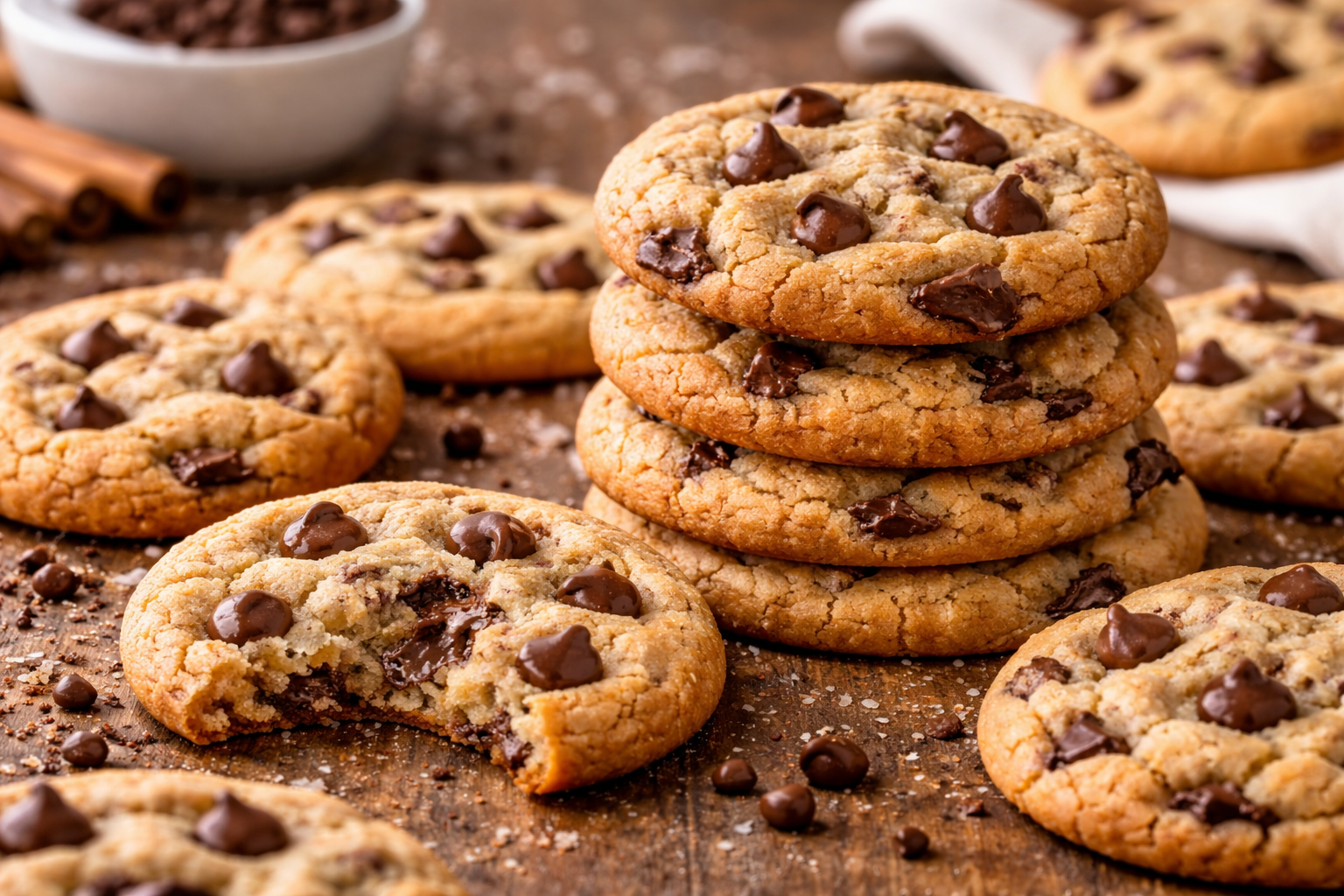
Few things in the kitchen are as universally loved as a warm chocolate chip cookie. It’s not just a dessert—it’s comfort, nostalgia, and joy baked into a simple circle of dough. One bite can take you back to childhood afternoons, school lunches, or late-night cravings answered straight from the oven.
But here’s the truth most people don’t talk about: not all chocolate chip cookies are created equal. Some are too flat. Some are dry. Others taste sweet but lack depth. The “perfect” chocolate chip cookie lives in a delicate balance—crisp edges, soft and chewy centers, deep buttery flavor, and pools of melted chocolate in every bite.
This recipe is designed to help you achieve exactly that. No shortcuts. No gimmicks. Just reliable techniques, well-balanced ingredients, and clear guidance so you can bake cookies that taste like they came from a high-end bakery—right in your own kitchen.
What Defines a Truly Great Chocolate Chip Cookie?
Before diving into ingredients and techniques, it’s important to understand what makes a chocolate chip cookie exceptional rather than average.
A great cookie should feel indulgent but not heavy. The texture should be layered—slightly crisp on the outside, soft and tender inside. The sweetness should be balanced by butter, vanilla, and a hint of salt. And most importantly, chocolate should be present in every bite, not just as an afterthought.
Texture, flavor, and structure all work together. When one element is off, the cookie suffers. That’s why this recipe focuses as much on why things work as how to do them.
Ingredients That Make the Difference
Chocolate chip cookies use simple pantry ingredients, but quality and ratios matter more than people realize.
Core Ingredients
- All-purpose flour
- Unsalted butter
- Brown sugar and white sugar
- Eggs
- Vanilla extract
- Baking soda
- Salt
- Chocolate chips or chunks
Each ingredient plays a specific role. Butter provides richness and flavor. Brown sugar adds moisture and chewiness, while white sugar helps with crisp edges. Eggs bind the dough and contribute structure. Flour builds the framework, and baking soda ensures proper spread.
Chocolate, of course, is the star. Using high-quality chocolate chips or chopped chocolate bars elevates the entire cookie.
Butter: Melted or Creamed?
One of the most debated topics in cookie baking is butter temperature.
Creamed butter (soft but not melted) creates cookies with better structure and lift. It traps air when beaten with sugar, leading to thicker cookies with a tender crumb. Melted butter, on the other hand, produces flatter, denser cookies with more chew.
For bakery-style cookies that hold their shape and stay soft inside, creamed butter is the better choice. It creates consistency and prevents excessive spreading.
Sugar Ratios and Why They Matter
Using a mix of brown and white sugar isn’t accidental—it’s essential.
Brown sugar contains molasses, which adds moisture and depth of flavor. This is what gives cookies their chewiness. White sugar helps cookies spread and crisp along the edges.
Too much white sugar makes cookies thin and crunchy. Too much brown sugar can make them dense. A balanced ratio creates harmony in texture and taste.
Choosing the Right Chocolate
Chocolate is not just an add-in—it’s the soul of the cookie.
Chocolate chips hold their shape, while chopped chocolate melts into irregular pools. Using a mix of both gives you structure and gooeyness at the same time.
Dark chocolate adds richness and contrast. Semi-sweet is classic and crowd-pleasing. Milk chocolate makes cookies sweeter and softer. The best choice depends on your preference, but quality always matters more than sweetness level.
Step-by-Step Method for Perfect Cookies
Mixing the Dough
Begin by creaming softened butter with both sugars until light and fluffy. This step should not be rushed. Proper creaming creates the foundation for good texture.
Add eggs one at a time, mixing well after each addition. Stir in vanilla extract. In a separate bowl, whisk together flour, baking soda, and salt, then gradually incorporate into the wet mixture.
Fold in chocolate gently. Overmixing at this stage can make cookies tough.
Chilling the Dough (Why It’s Worth It)
Chilling the dough for at least 30 minutes allows the flour to hydrate and the butter to firm up. This prevents excessive spreading and deepens flavor.
If you want thicker cookies with more complex taste, chilling is non-negotiable.
Baking for Ideal Texture
Preheat the oven fully before baking. Bake cookies until the edges are set but the centers look slightly underdone. This ensures soft, chewy interiors once cooled.
Cookies continue baking on the tray after removal from the oven, so resist the urge to overbake.
How to Control Cookie Thickness
If your cookies spread too much, the dough may be warm or the butter too soft. If they don’t spread enough, the flour may be over-measured.
For thicker cookies, roll dough into tall balls rather than flat discs. This simple shaping trick creates height without changing ingredients.
Flavor Boosters Most Recipes Miss
A few small additions can dramatically improve flavor.
A sprinkle of flaky sea salt on top balances sweetness and enhances chocolate. A touch of espresso powder deepens chocolate flavor without tasting like coffee. Browning some of the butter adds nutty complexity for advanced bakers.
These are optional, but once you try them, it’s hard to go back.
Common Mistakes and How to Fix Them
Dry cookies often result from too much flour or overbaking. Flat cookies usually come from overly warm butter or skipping the chill step.
Using a kitchen scale instead of measuring cups improves accuracy dramatically. Even small differences can change cookie texture.
Storage and Make-Ahead Tips
Baked cookies stay fresh at room temperature for up to five days when stored in an airtight container.
Cookie dough can be refrigerated for up to three days or frozen for three months. Baking from frozen is easy—just add one or two minutes to the bake time.
Chocolate Chip Cookies for Every Occasion
These cookies are perfect for lunchboxes, parties, holidays, bake sales, or simple weeknight treats. They travel well, freeze beautifully, and please almost everyone.
They also make excellent gifts when packed in tins or jars with parchment and ribbon.
Homemade vs Store-Bought Cookies
Homemade cookies win on every level—flavor, texture, freshness, and ingredient control. You know exactly what goes into them, and you can adjust sweetness, chocolate amount, and size to your liking.
Once you master this recipe, store-bought cookies rarely compare.
Conclusion: A Cookie Worth Baking Again and Again
Chocolate chip cookies may seem simple, but perfection lies in the details. When you understand ingredients, technique, and timing, you can consistently bake cookies that are soft, chewy, rich, and unforgettable.
This recipe isn’t just about cookies—it’s about confidence in the kitchen. Try it once, and it will become your go-to forever.
Bake a batch today and experience what truly great chocolate chip cookies taste like.
FAQs – Chocolate Chip Cookies
Why are my cookies flat?
Butter that is too soft or skipping dough chilling usually causes excessive spreading.
Can I make these cookies eggless?
Yes, but texture will change. Use a flax egg or yogurt substitute.
What makes cookies chewy instead of crispy?
Higher brown sugar content and slightly underbaking create chewiness.
Can I freeze cookie dough?
Absolutely. Shape dough balls and freeze for up to three months.
How do I get bakery-style thick cookies?
Chill dough and shape it tall before baking.
Should I use chocolate chips or chunks?
A mix of both gives the best texture and flavor.
Why add salt on top?
It enhances chocolate flavor and balances sweetness.
Can I reduce sugar?
You can slightly reduce sugar, but texture and spread may change.
Also try – Coconut Cookies Recipe