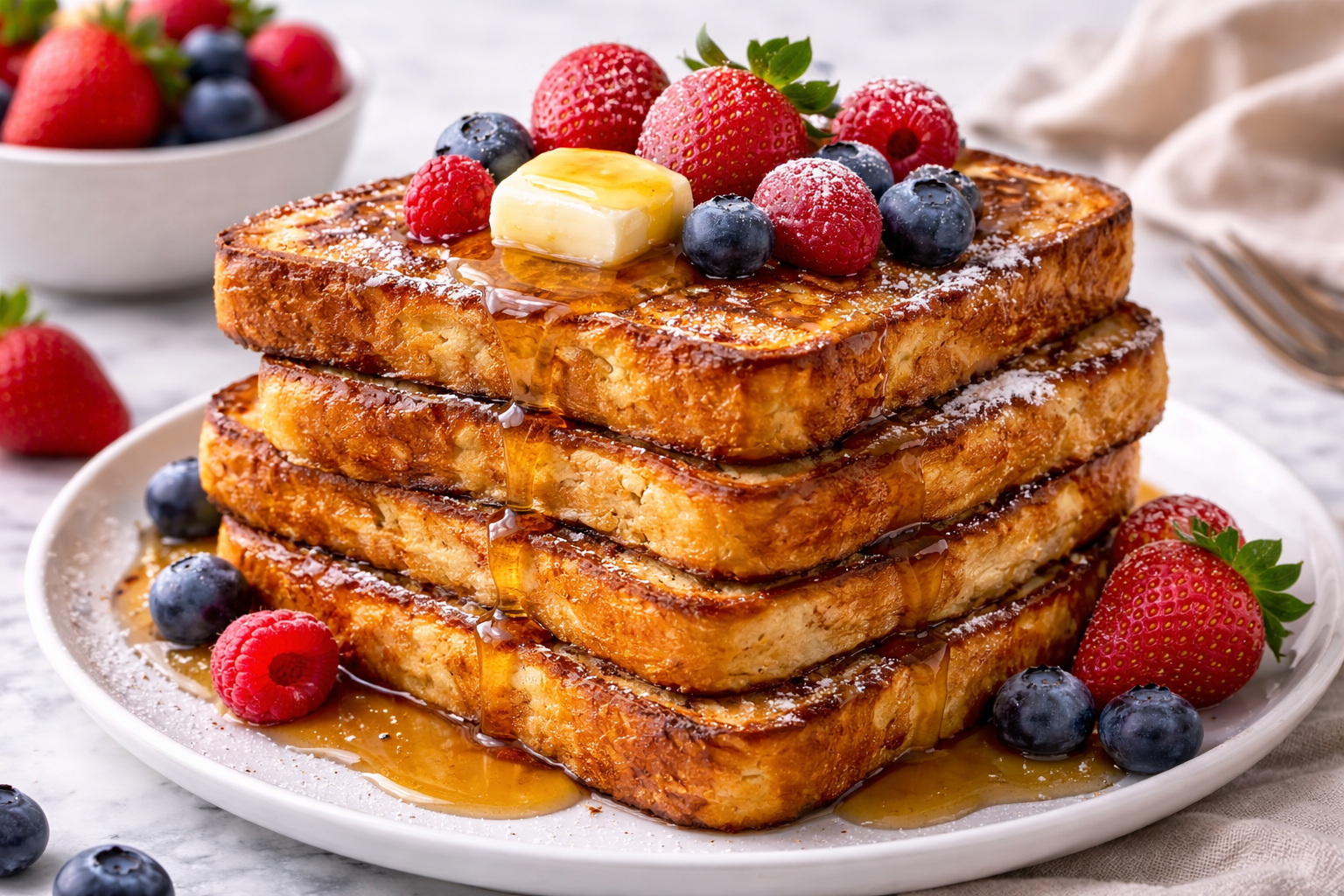
French toast is one of those timeless breakfast dishes that feels both comforting and luxurious at the same time. It is simple enough for a busy weekday morning, yet elegant enough to serve for a weekend brunch or special occasion. Made with everyday pantry staples like eggs, milk, bread, and a touch of sweetness, French toast transforms humble ingredients into something truly satisfying.
What makes French toast special is its balance of textures and flavors. The outside turns beautifully golden and lightly crisp, while the inside stays soft, custardy, and rich. When topped with butter, syrup, fruits, or even a dusting of powdered sugar, it becomes a dish that appeals to all ages. Whether you enjoy it plain or fully loaded, classic French toast never goes out of style.
What Is French Toast?
French toast is a breakfast dish made by dipping slices of bread into a mixture of eggs and milk, often flavored with sugar, vanilla, or spices, and then pan-frying the bread until cooked through. Although commonly associated with France, versions of French toast exist across many cultures and cuisines.
Historically, French toast was created as a way to use stale bread rather than wasting it. The egg mixture softens and revives the bread, making it tender on the inside while crisp on the outside once cooked. Over time, this practical dish evolved into a beloved breakfast staple enjoyed worldwide.
Why This Classic French Toast Recipe Works
This recipe focuses on simplicity and balance. It does not overpower the bread with too much egg, nor does it turn soggy or dry. The custard is well-seasoned, lightly sweetened, and cooked gently to ensure even browning.
The result is French toast that is:
- Crisp and golden on the outside
- Soft, creamy, and fully cooked inside
- Lightly sweet without being overpowering
- Perfect for both sweet and savory toppings
Ingredients You’ll Need
Only a few basic ingredients are required to make the best French toast at home.
- Thick slices of bread
- Eggs
- Milk or cream
- Sugar or sweetener
- Vanilla extract
- Ground cinnamon (optional)
- Butter or oil for cooking
Using good-quality ingredients makes a noticeable difference, especially when the recipe is this simple.
Choosing the Best Bread for French Toast
Bread plays a major role in the final texture of French toast. Thick, sturdy slices work best because they soak up the custard without falling apart. Slightly stale bread is ideal since it absorbs liquid better than fresh bread.
Popular bread choices include brioche, challah, sourdough, and thick white bread. Brioche and challah give a richer, softer texture, while sourdough adds a subtle tang that balances sweetness beautifully.
How to Make French Toast Step by Step
To begin, whisk the eggs, milk, sugar, vanilla, and cinnamon together in a shallow bowl until smooth. This mixture forms the custard that coats the bread.
Dip each slice of bread into the custard, allowing it to soak briefly on both sides. The goal is to coat the bread evenly without oversaturating it. Heat a pan over medium heat and melt a small amount of butter. Once hot, place the soaked bread into the pan and cook until golden brown on each side.
Flip carefully and cook until both sides are evenly browned and the center is cooked through. Remove from the pan and repeat with the remaining slices, adding more butter as needed.
Tips for Perfect French Toast Every Time
French toast may look simple, but small details make a big difference. Using medium heat prevents burning while allowing the inside to cook properly. Avoid overcrowding the pan, as this lowers the temperature and results in uneven cooking.
Let excess custard drip off the bread before placing it in the pan. This prevents soggy centers and helps create crisp edges. Cooking slowly and patiently ensures the best texture and flavor.
Sweet Topping Ideas
French toast pairs beautifully with a variety of toppings. Classic maple syrup is always a favorite, but there are many delicious ways to customize your plate.
Fresh fruits like strawberries, blueberries, or bananas add brightness and freshness. A dusting of powdered sugar gives a bakery-style finish, while whipped cream or honey adds extra indulgence. Nut butters and fruit compotes also work wonderfully.
Savory French Toast Variations
Although traditionally sweet, French toast can also be enjoyed in savory form. By reducing the sugar and adding salt, herbs, or cheese, you can create a completely different dish.
Savory French toast pairs well with avocado, sautéed mushrooms, grilled tomatoes, or even a fried egg on top. It makes a satisfying breakfast or brunch option for those who prefer less sweetness.
Common Mistakes to Avoid
One common mistake is using thin bread, which often turns mushy. Another is cooking on high heat, which browns the outside too quickly while leaving the inside undercooked.
Using too much egg in the custard can also cause a strong eggy taste. The key is balance—enough egg for structure, enough milk for creaminess, and gentle heat for even cooking.
Make-Ahead and Storage Tips
French toast can be made ahead and stored in the refrigerator for up to two days. Reheat gently in a pan or oven to restore crispness. For longer storage, cooked French toast can be frozen and reheated directly from frozen in a toaster or oven.
This makes it a convenient option for busy mornings or meal prep.
Healthier French Toast Options
For a lighter version, you can use whole-grain bread, reduce the sugar, or use plant-based milk. Cooking with minimal butter and topping with fruit instead of syrup also helps reduce calories without sacrificing flavor.
Conclusion
Classic French toast is proof that simple ingredients can create something truly special. With the right bread, a well-balanced custard, and gentle cooking, you can make French toast that is crisp, soft, and full of flavor. Whether served plain or dressed up with toppings, this timeless breakfast never disappoints.
Try this recipe once, and it will quickly become your go-to French toast at home. 🍞✨
FAQs
What bread is best for French toast?
Thick, sturdy bread like brioche, challah, or sourdough works best because it absorbs the custard without falling apart.
Can I make French toast without milk?
Yes, you can use water, plant-based milk, or even cream substitutes, though milk adds richness.
Why is my French toast soggy?
Soggy French toast usually happens when the bread is too thin, soaked too long, or cooked on low heat.
Can French toast be frozen?
Yes, cooked French toast freezes well and can be reheated in a toaster or oven.
Is French toast sweet or savory?
It can be both. The classic version is sweet, but savory versions are also popular.
How do I keep French toast warm for serving?
Place cooked slices on a baking tray in a low oven until ready to serve.
Also Try –Cottage Cheese Pancakes – Fluffy, High-Protein & Perfect for Breakfast