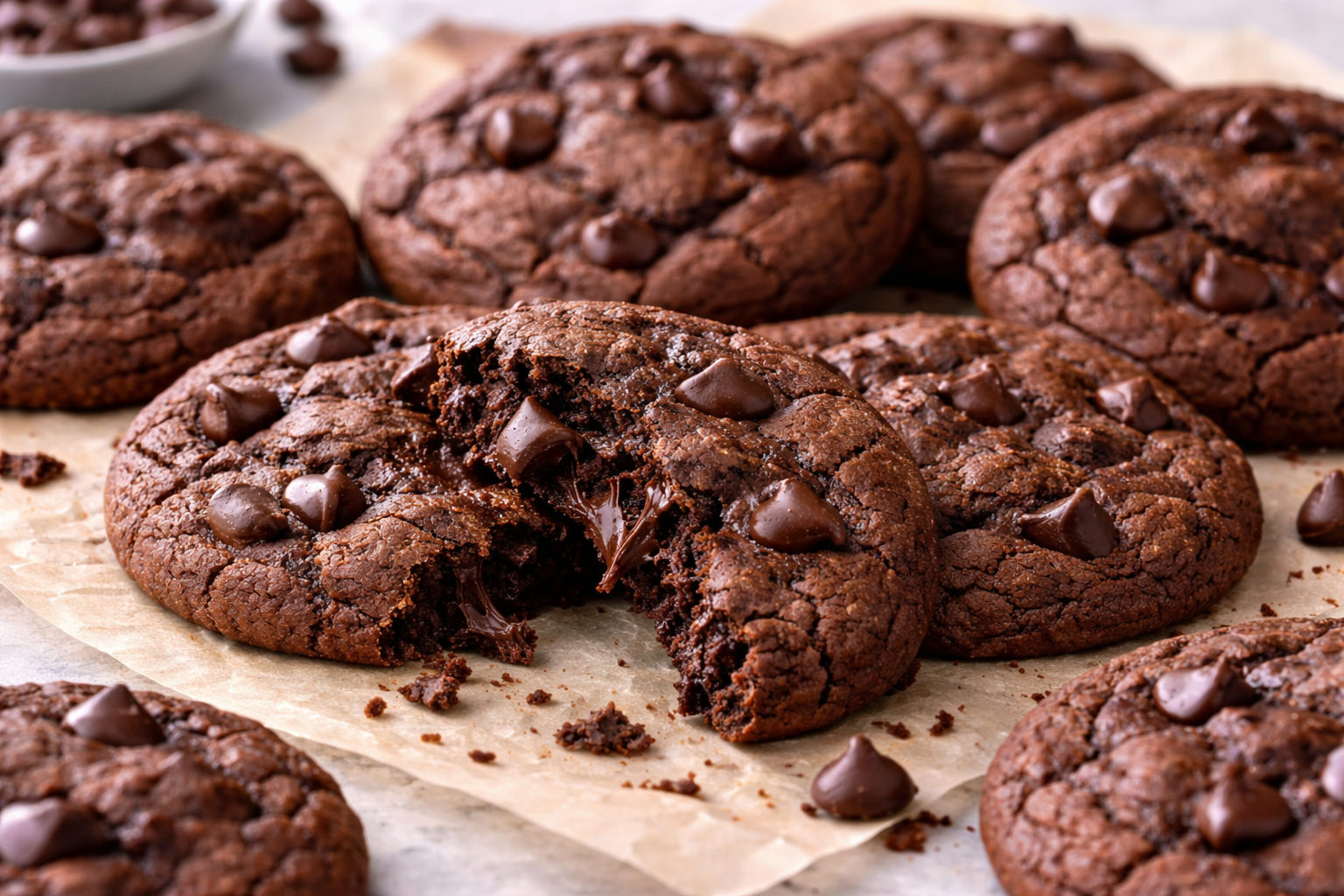
There are cookies… and then there are chewy double chocolate cookies. The kind that crack slightly on top, stay soft in the center, and hit you with deep chocolate flavor in every bite. These aren’t dry or cakey. They’re rich, indulgent, and unapologetically chocolatey.
This recipe is for anyone who believes chocolate cookies should taste like real chocolate, not just sugar with a hint of cocoa. Whether you’re baking for family, a celebration, or just to satisfy a late-night craving, these cookies deliver consistent, bakery-quality results at home.
In this guide, you’ll learn not just how to make the best double chocolate cookies, but why each step matters. You’ll also get expert baking tips, storage advice, variations, and answers to common cookie problems—so your cookies turn out perfect every time.
What Makes Double Chocolate Cookies Truly Chewy
Chewiness isn’t accidental. It’s the result of smart ingredient choices and controlled baking techniques.
Key Factors Behind Chewy Texture
- Fat balance: Butter provides richness while keeping cookies tender
- Sugar ratio: More brown sugar than white sugar adds moisture
- Egg structure: Eggs bind ingredients and add softness
- Underbaking slightly: Ensures soft centers after cooling
Unlike crispy cookies, chewy cookies rely on moisture retention. Every ingredient in this recipe is chosen with that goal in mind.
Double Chocolate Cookies vs Regular Chocolate Cookies
Many people confuse chocolate cookies with double chocolate cookies, but the difference is important.
Chocolate cookies usually rely on cocoa powder for flavor.
Double chocolate cookies use two forms of chocolate—cocoa powder in the dough and chocolate chunks or chips mixed in.
Why Double Chocolate Is Better
- Deeper chocolate intensity
- Creamy melted chocolate pockets
- More complex texture contrast
- Richer aroma and aftertaste
If you love brownies, you’ll love these cookies.
Ingredients That Make or Break This Recipe
Every ingredient plays a specific role. Skipping or swapping without understanding can change the outcome dramatically.
Cocoa Powder: The Flavor Backbone
Use unsweetened cocoa powder, not sweetened chocolate drink mixes. Dutch-processed cocoa gives a darker, smoother flavor, while natural cocoa adds sharpness. Both work, but consistency matters.
Chocolate Chips or Chunks
For the best results, use a mix of:
- Semi-sweet chocolate chunks for meltiness
- Dark chocolate chips for depth
Avoid compound chocolate or low-quality chips—they won’t melt properly.
Butter Matters More Than You Think
Butter should be softened, not melted. Melted butter leads to flatter cookies and less structure. Soft butter creams better with sugar, trapping air that improves texture.
Brown Sugar vs White Sugar
Brown sugar contains molasses, which:
- Adds moisture
- Enhances chewiness
- Deepens flavor
A higher brown sugar ratio is essential for chewy cookies.
Step-by-Step: How to Make Chewy Double Chocolate Cookies
This process is simple but precise. Follow it carefully for consistent results.
Mixing the Dough
Start by creaming softened butter with brown and white sugar until light and fluffy. This step creates air pockets that help cookies rise slightly without becoming cakey.
Add eggs one at a time, followed by vanilla extract. Mix just until combined.
Combining Dry Ingredients
In a separate bowl, whisk together flour, cocoa powder, baking soda, and salt. This ensures even distribution and prevents bitter cocoa clumps.
Gradually add dry ingredients to the wet mixture. Mix on low speed until just combined.
Finally, fold in chocolate chunks gently to avoid overworking the dough.
Why Chilling the Dough Is Non-Negotiable
Chilling the dough isn’t optional—it’s essential.
Benefits of Chilling
- Prevents excessive spreading
- Enhances chocolate flavor
- Improves texture and chew
- Creates thicker cookies
Even 30 minutes makes a difference, but 1–2 hours delivers bakery-style results.
Baking Tips for Perfect Results
Oven behavior varies, so visual cues matter more than timers.
How to Know When Cookies Are Done
- Edges should look set
- Centers should appear soft and slightly glossy
- Cookies will firm up as they cool
Overbaking is the #1 reason cookies turn dry.
Cooling: The Final Texture Test
Let cookies cool on the baking sheet for 5 minutes before transferring to a rack. This allows the structure to set without losing moisture.
Cooling too fast can cause breakage, while skipping cooling leads to mushy centers.
Common Mistakes and How to Avoid Them
Even experienced bakers make these errors.
Overmixing the Dough
Overmixing activates gluten, resulting in dense cookies. Mix just until ingredients come together.
Incorrect Measuring
Too much flour is a silent cookie killer. Spoon flour into the measuring cup and level it off—never scoop directly.
Baking Too Long
Chocolate cookies don’t look “done” when they’re done. Trust the soft center.
Flavor Variations You’ll Love
Once you master the base recipe, try these creative twists.
Nutty Chocolate Cookies
Add chopped walnuts or pecans for crunch and contrast.
Espresso Chocolate Cookies
A teaspoon of espresso powder intensifies chocolate flavor without tasting like coffee.
White Chocolate Contrast
Swap half the chocolate chips for white chocolate to balance bitterness.
Sea Salt Finish
A light sprinkle of flaky sea salt enhances sweetness and depth.
Make-Ahead, Freezing, and Storage Tips
These cookies are perfect for planning ahead.
Storing Baked Cookies
- Room temperature: Up to 4 days in an airtight container
- Refrigerated: Not recommended (dries cookies)
Freezing Cookie Dough
Scoop dough into balls and freeze on a tray. Once frozen, store in a freezer bag for up to 3 months. Bake directly from frozen, adding 1–2 minutes.
Nutrition Overview (Approximate)
While these are indulgent cookies, it’s helpful to know what you’re eating.
- Calories per cookie: ~180–220
- Sugar: Moderate
- Fat: High (from butter and chocolate)
These cookies are best enjoyed as a treat, not an everyday snack—and that’s what makes them special.
Why This Recipe Works Every Time
This double chocolate cookie recipe balances science and simplicity. The ingredient ratios support chewiness, the method prevents dryness, and the baking cues ensure perfect texture.
It’s forgiving enough for beginners and refined enough for experienced bakers.
Bake Once, Crave Forever
Chewy double chocolate cookies aren’t just dessert—they’re comfort, celebration, and indulgence in one bite. With rich cocoa flavor, molten chocolate pockets, and soft centers, this recipe delivers everything a chocolate lover wants.
Try it once, customize it your way, and it’ll become a permanent favorite in your baking rotation.
👉 Bake a batch today and share them with someone you love—or keep them all to yourself. No judgment.
FAQs
1. Why are my double chocolate cookies dry?
Dry cookies usually mean too much flour or overbaking. Measure flour carefully and remove cookies when centers are still soft.
2. Can I use melted butter instead of softened butter?
You can, but it will change the texture. Melted butter leads to flatter, less chewy cookies.
3. Do I need to chill the dough?
Yes. Chilling improves flavor, thickness, and chewiness. Skipping it often leads to flat cookies.
4. Can I make these cookies eggless?
Yes, but texture will change. Use a flax egg or commercial egg replacer for best results.
5. Which cocoa powder is best?
Unsweetened natural or Dutch-processed cocoa both work. Choose one and stay consistent.
6. Can I freeze baked cookies?
Yes. Freeze cooled cookies in an airtight container for up to 2 months. Thaw at room temperature.
7. Why didn’t my cookies spread?
Cold dough, too much flour, or old baking soda can prevent spreading. Let dough rest briefly before baking.
8. Can I reduce sugar?
Reducing sugar affects texture and moisture. It’s better to adjust portion size than alter the recipe.