
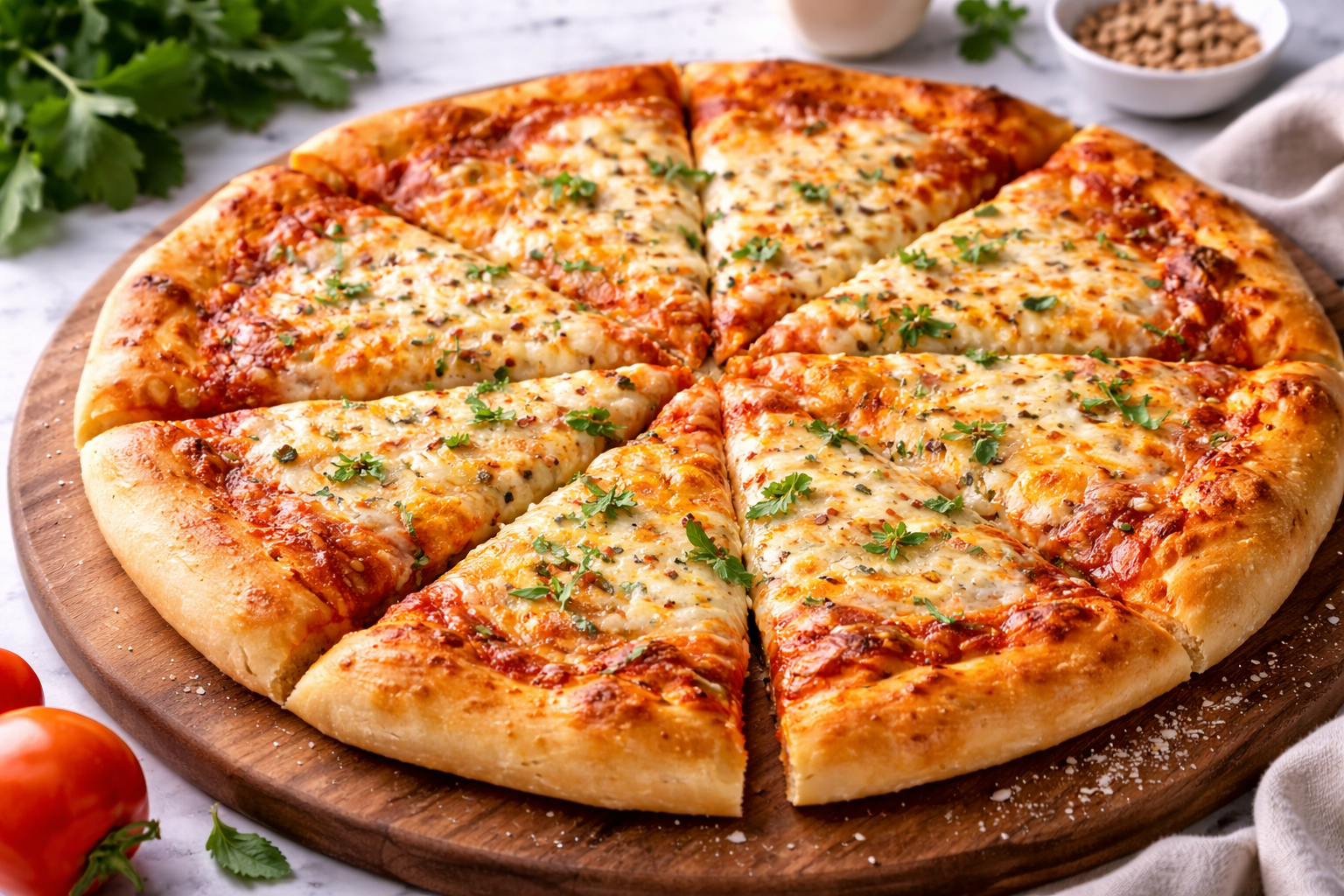
Cheese pizza is proof that simplicity, when done right, is unbeatable. No heavy toppings, no complicated combinations—just crust, sauce, and cheese coming together in perfect harmony. It’s the pizza most people fall in love with first and the one they keep coming back to, no matter how adventurous their tastes become.
A truly great cheese pizza isn’t bland or boring. It’s flavorful, aromatic, and satisfying, with a crisp base, a sauce that balances sweetness and acidity, and cheese that melts into golden, bubbling perfection. Making it at home may seem intimidating, but once you understand the fundamentals, it becomes one of the most rewarding dishes you can master in your kitchen.
This guide walks you through everything you need to know about making a classic cheese pizza from scratch. From dough preparation to baking techniques, from choosing the right cheese to avoiding common mistakes, this is a complete resource designed to help you create a pizza that tastes like it came straight out of a professional pizza oven.
Why Cheese Pizza Never Goes Out of Style
Cheese pizza has stood the test of time because it highlights the core elements of pizza without distraction. Every bite tells you whether the dough is good, whether the sauce is balanced, and whether the cheese has been handled properly. There is nothing to hide behind.
Its universal appeal comes from familiarity and comfort. Cheese pizza works for kids, adults, parties, casual dinners, and special occasions. It can be dressed up with gourmet ingredients or kept humble and rustic. No matter the setting, it always feels right.
From New York-style slices to Neapolitan pies, cheese pizza adapts to cultures and preferences while staying true to its roots.
Understanding the Foundations of Great Cheese Pizza
At its heart, cheese pizza relies on three main components: dough, sauce, and cheese. Each element plays a crucial role, and small adjustments can dramatically change the final result.
The dough provides structure and texture. It must be strong enough to hold toppings but light enough to stay airy. The sauce adds brightness and depth, cutting through the richness of the cheese. The cheese ties everything together, delivering creaminess, stretch, and savory flavor.
Mastering cheese pizza means understanding how these elements interact rather than treating them as separate steps.
Pizza Dough: The Backbone of Cheese Pizza
Pizza dough is where many homemade pizzas succeed or fail. A good dough should be elastic, easy to stretch, and capable of developing flavor through fermentation.
Using yeast allows the dough to rise and develop complexity. Salt strengthens gluten and enhances flavor, while water hydrates the flour and activates the yeast. Olive oil adds tenderness and helps create a crisp outer crust.
Allowing the dough to rest and ferment, even for a few hours, dramatically improves flavor and texture. Longer fermentation leads to better browning and a more digestible crust.
Key Dough Ingredients
- All-purpose or bread flour
- Active dry or instant yeast
- Warm water
- Salt
- Olive oil
These simple ingredients, when handled with care, produce a crust that rivals any pizzeria.
Tomato Sauce: Simple, Bright, and Balanced
A great cheese pizza sauce doesn’t need to be cooked for hours or overloaded with spices. In fact, simplicity is its strength. High-quality canned tomatoes, lightly seasoned, allow the natural sweetness and acidity to shine.
Crushed or pureed tomatoes form the base, while salt enhances flavor. A touch of olive oil adds richness, and optional garlic or oregano provides subtle depth without overpowering the cheese.
The sauce should be spread thinly. Too much sauce can make the crust soggy and overwhelm the balance of flavors.
Choosing the Right Cheese for Cheese Pizza
Cheese is the star of this pizza, and choosing the right kind makes all the difference. Low-moisture mozzarella is the classic choice because it melts evenly and creates that signature stretch.
Fresh mozzarella offers a softer texture and delicate flavor but releases more moisture, which requires careful baking. Many pizzerias blend cheeses to achieve the perfect melt and flavor balance.
A small amount of Parmesan or provolone can be added for extra depth, but the focus should always remain on mozzarella.
Preparing Your Kitchen for Pizza Success
Before assembling the pizza, preparation is key. Preheating your oven to its highest safe temperature ensures proper crust development. A pizza stone or steel helps mimic professional ovens by retaining and transferring intense heat.
Dusting your work surface lightly with flour prevents sticking while shaping the dough. Organizing ingredients in advance keeps the process smooth and stress-free.
Pizza-making moves quickly once assembly begins, so readiness matters.
How to Make Cheese Pizza Step by Step
The dough is first stretched gently by hand, starting from the center and working outward. This preserves air bubbles and creates a light, airy crust. Rolling pins are avoided because they compress the dough too much.
Once shaped, the dough is transferred to a prepared surface. Sauce is spread evenly, leaving a small border for the crust. Cheese is added generously but evenly, ensuring full coverage without excess.
The pizza is baked until the crust is golden and the cheese is bubbling with light brown spots. This balance signals proper baking and flavor development.
Baking Methods and What Works Best
Home ovens vary, but high heat is always essential. Baking on a preheated stone or steel yields the best results, creating crisp bottoms and well-cooked toppings.
If a stone isn’t available, an inverted baking sheet can help. Placing the pizza on a lower rack initially and finishing higher in the oven improves browning.
Watching the pizza closely during the final minutes prevents burning and ensures perfect doneness.
Texture and Flavor: What to Look For
A perfect cheese pizza has contrast. The crust should be crisp on the outside and chewy inside. The sauce should be tangy without tasting raw. The cheese should be fully melted, slightly browned, and stretchy.
When these elements align, each bite feels balanced and satisfying. There’s no single overpowering flavor—just harmony.
Common Cheese Pizza Mistakes and How to Avoid Them
Soggy crusts often result from too much sauce or underbaking. Using less sauce and baking longer at higher heat solves this problem.
Cheese burning before the crust cooks usually means the oven temperature is too low. High heat cooks the crust quickly before the cheese overbrowns.
Overloading toppings, even cheese, throws off balance. Restraint is key.
Variations That Still Respect the Classic
While classic cheese pizza shines on its own, small variations can add interest without losing identity. A drizzle of olive oil after baking enhances aroma. Fresh basil adds herbal freshness.
Switching between thin-crust and thick-crust styles changes texture while keeping flavors familiar. Using sourdough dough introduces mild tang and complexity.
These tweaks keep the pizza exciting while honoring its roots.
Serving and Pairing Cheese Pizza
Cheese pizza pairs beautifully with simple sides. A fresh green salad adds contrast and brightness. Sparkling water or soda cleanses the palate, while wine or beer complements richness.
Serving pizza hot and fresh maximizes flavor and texture. Letting it rest briefly after baking helps the cheese set and makes slicing easier.
Storage and Reheating Tips
Leftover cheese pizza stores well when wrapped tightly and refrigerated. Reheating in a skillet restores crispness better than a microwave.
Oven reheating at moderate temperature preserves texture without drying out the pizza. Proper reheating can make leftovers nearly as good as fresh.
Why Homemade Cheese Pizza Is Worth It
Making cheese pizza at home gives you control over ingredients, flavor, and texture. It’s fresher, customizable, and deeply satisfying.
Beyond taste, the process itself is rewarding. Stretching dough, smelling baking bread, and watching cheese melt creates an experience that store-bought pizza can’t replicate.
Once mastered, homemade cheese pizza becomes a reliable, go-to meal that never disappoints.
Conclusion
Classic cheese pizza proves that less truly can be more. When quality ingredients meet thoughtful technique, the result is a dish that feels timeless, comforting, and endlessly satisfying.
Whether you’re cooking for family, friends, or yourself, mastering cheese pizza gives you a foundation that opens the door to countless variations. Start with the basics, respect the process, and enjoy one of the world’s most beloved foods in its purest form.
FAQs
What cheese is best for classic cheese pizza?
Low-moisture mozzarella is ideal because it melts evenly and provides excellent stretch and flavor.
Can I make cheese pizza without a pizza stone?
Yes, a preheated baking sheet or steel works well and still produces a crisp crust.
Why is my pizza crust not crispy?
Low oven temperature or too much sauce usually causes soggy crusts. High heat is essential.
How much cheese should I use?
Enough to cover the sauce evenly without piling it too thick, which can affect baking.
Can I prepare pizza dough ahead of time?
Absolutely. Dough improves with overnight refrigeration and develops better flavor.
Is cheese pizza good for kids?
Yes, it’s one of the most kid-friendly and universally loved pizza styles.