
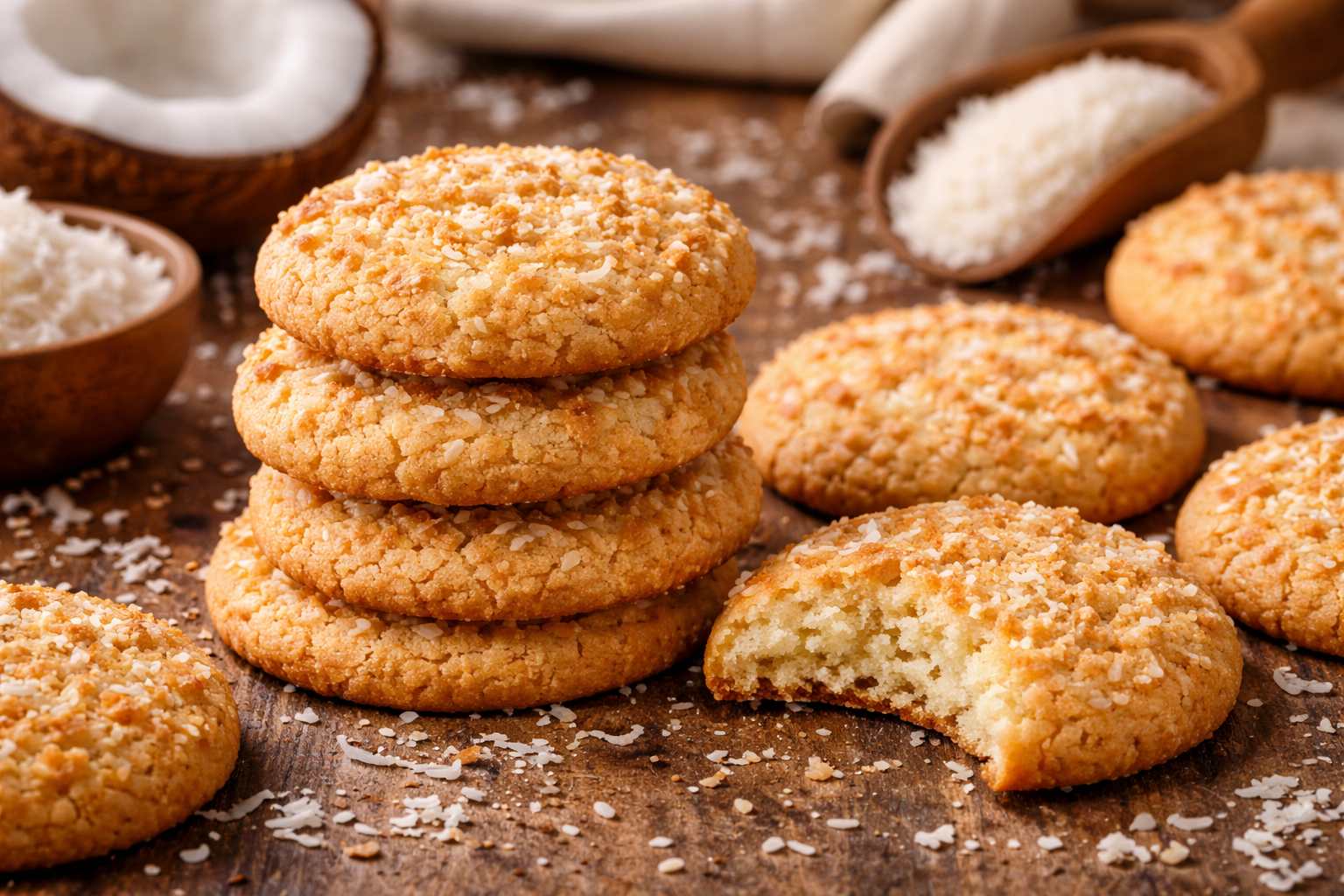
There’s something deeply comforting about the aroma of freshly baked cookies drifting through the kitchen. Now imagine that warmth combined with the nutty sweetness of coconut and the joy of baking without eggs. Eggless coconut cookies bring together simplicity, flavor, and nostalgia in every bite.
Whether you are avoiding eggs for dietary reasons, baking for kids, or simply love coconut-based desserts, this recipe fits beautifully into your routine. These cookies are not overly sweet, have a delicate crunch, and melt gently in the mouth. Best of all, they require no fancy equipment and use ingredients you probably already have.
In Indian households especially, coconut is more than just an ingredient—it’s tradition. From sweets to savory dishes, coconut adds richness and depth. These cookies are a modern take on that classic ingredient, blending old-world comfort with modern baking ease.
What Makes Eggless Coconut Cookies Special?
Eggless coconut cookies are not just a substitute for traditional cookies; they stand strong on their own. The absence of eggs allows the coconut flavor to shine, while butter and milk help bind the dough and create a tender crumb.
These cookies are perfect if you want a balance of texture and taste. They are not overly dry like some eggless bakes, nor are they too soft. The result is a cookie that pairs beautifully with tea, coffee, or even warm milk.
Another reason they are loved is versatility. You can bake them crisp or chewy, thin or thick, plain or loaded with extras like chocolate chips or nuts.
Ingredients Breakdown and Their Role
Understanding ingredients helps you bake better cookies every time. Each component plays a specific role in texture and flavor.
Coconut
Desiccated coconut is the star of this recipe. It provides texture, mild sweetness, and a distinct nutty aroma. Fine coconut gives a smoother cookie, while coarse coconut adds crunch.
Butter
Butter adds richness and helps create that classic cookie texture. Softened butter creams well with sugar, trapping air and making cookies light yet crisp.
Sugar
Granulated sugar gives crisp edges, while powdered sugar makes cookies softer. You can adjust based on your texture preference.
Milk
Milk acts as a binding agent in the absence of eggs. It adds moisture and helps form a pliable dough.
Flour
All-purpose flour provides structure. Measuring accurately is important to avoid dense cookies.
Baking Powder
This gives a gentle lift, preventing the cookies from becoming too hard.
Flavorings
Vanilla extract enhances sweetness, while cardamom can give a subtle Indian bakery-style aroma.
Step-by-Step Eggless Coconut Cookies Method
Preparing the Dough
Start by creaming softened butter and sugar until light and fluffy. This step is crucial because it affects the final texture. Once creamy, add milk and vanilla extract, mixing gently.
In a separate bowl, combine flour, baking powder, and desiccated coconut. Gradually add the dry ingredients to the wet mixture. Mix just until everything comes together. Overmixing can make cookies tough.
The dough should be soft but not sticky. If it feels dry, add a teaspoon of milk. If it’s too soft, sprinkle a little flour.
Shaping the Cookies
Divide the dough into small portions and roll into balls. Slightly flatten them using your palm or the back of a spoon. Leave space between cookies, as they spread slightly during baking.
For a decorative touch, press a fork lightly on top or sprinkle some coconut flakes before baking.
Baking Instructions
Preheat your oven to 170°C (340°F). Place cookies on a lined baking tray and bake for 12–15 minutes. The edges should turn light golden, while the center remains pale.
Remember, cookies continue to firm up as they cool, so avoid overbaking.
Texture Control: Crispy vs Chewy Cookies
One of the best parts about this recipe is control. You can customize the texture easily.
For crisp cookies, bake a little longer and use granulated sugar. For softer cookies, slightly underbake and use powdered sugar.
Let cookies cool completely before storing. Freshly baked cookies may feel soft but will crisp up as they cool.
Flavor Variations to Try
Eggless coconut cookies are a perfect base for creativity.
You can add chocolate chips for a rich twist or chopped nuts like almonds and cashews for crunch. A pinch of cinnamon or nutmeg adds warmth, while orange zest gives a refreshing citrus note.
For a healthier version, replace part of the flour with whole wheat flour and use coconut sugar instead of refined sugar.
Health Benefits of Coconut in Baking
Coconut is not just delicious; it’s nutritious too.
It contains healthy fats that provide energy and support metabolism. Coconut also adds fiber, aiding digestion and keeping you full longer.
Compared to heavily frosted desserts, coconut cookies feel lighter and more satisfying, making them a smarter treat option when baked at home.
Common Mistakes and How to Avoid Them
Many first-time bakers face similar issues, but they are easy to fix.
If cookies spread too much, the butter may be too soft. Chill the dough for 15 minutes before baking. If cookies turn hard, they may be overbaked or have too much flour.
Always preheat the oven and measure ingredients accurately for consistent results.
Storage and Shelf Life
Once completely cooled, store cookies in an airtight container at room temperature. They stay fresh for up to 7 days.
For longer storage, you can freeze baked cookies for up to a month. Simply warm them slightly before serving to revive texture.
Eggless Coconut Cookies for Festivals and Gifting
These cookies make wonderful homemade gifts. Pack them in airtight jars, tie with ribbon, and you have a thoughtful festive treat.
They are also ideal for celebrations like Diwali, Christmas, or school events where eggless desserts are preferred.
Why Homemade Eggless Cookies Are Better Than Store-Bought
Homemade cookies allow full control over ingredients, sweetness, and freshness. There are no preservatives, artificial flavors, or excessive sugar.
They are also cost-effective and customizable, making baking at home both satisfying and practical.
Bake Once, Love Forever
Eggless coconut cookies are proof that simple ingredients can create magical results. They are easy, versatile, and deeply comforting. Whether you’re a beginner baker or someone experienced, this recipe deserves a permanent place in your baking notebook.
If you enjoyed this recipe, explore more eggless baking ideas and homemade cookie recipes on our blog. Baking at home is not just about food—it’s about memories, warmth, and sharing joy.
Try this recipe today and let your kitchen smell like happiness.
FAQs – Eggless Coconut Cookies
Can I make coconut cookies without butter?
Yes, you can replace butter with coconut oil, but the flavor and texture will slightly change.
Are eggless coconut cookies vegan?
They can be made vegan by using plant-based butter and non-dairy milk.
Can I use fresh coconut instead of desiccated coconut?
Fresh coconut releases moisture and may affect texture. Desiccated coconut works best.
Why are my cookies too hard?
Overbaking or excess flour can make cookies hard. Reduce baking time slightly.
Can I bake these cookies without an oven?
Yes, you can bake them in a heavy-bottom pan or cooker using a stand and lid.
How do I make cookies more crispy?
Bake slightly longer and use granulated sugar instead of powdered sugar.
Can I freeze the cookie dough?
Yes, shape dough balls and freeze them. Bake directly from frozen with slight extra time.
Are these cookies kid-friendly?
Absolutely. They are mildly sweet and perfect for children.