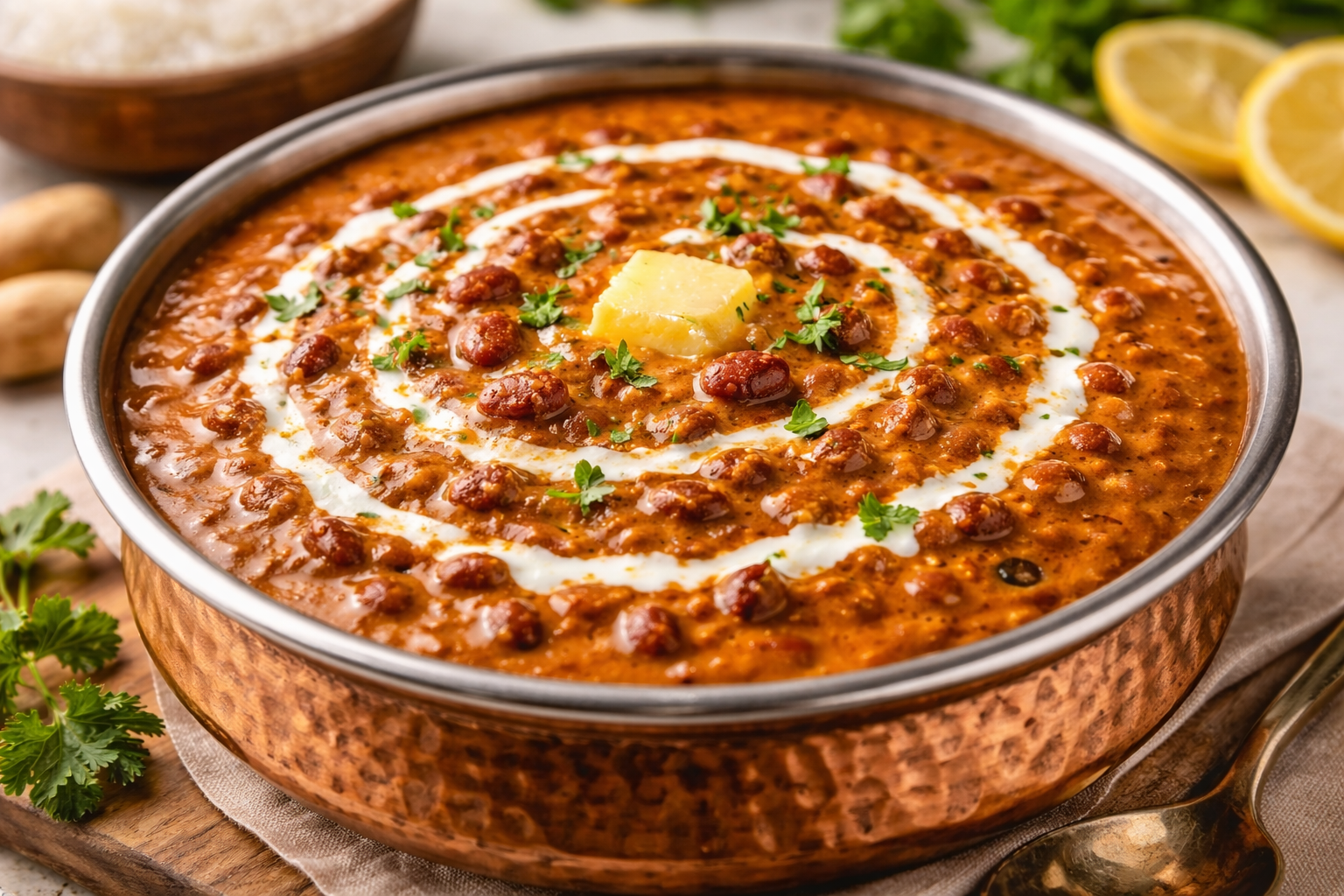
Dal Makhani is not just another lentil dish. It is one of the most iconic recipes in North Indian cuisine. Creamy, buttery, and deeply flavorful, this Punjabi Dal Makhani has earned its place on restaurant menus across the world.
If you have ever wondered how restaurants make Dal Makhani so rich, smooth, and perfectly balanced, you are in the right place. In this detailed guide, you will learn how to make authentic Dal Makhani at home using simple ingredients, expert techniques, and traditional slow-cooking methods.
This is not a rushed version. This is the real deal. The kind that tastes better the next day.
By the end of this article, you will understand:
- The science behind creamy Dal Makhani
- Why slow cooking matters
- How to get restaurant-style flavor at home
- Common mistakes to avoid
- Variations and healthier options
Let us begin.
What is Dal Makhani?
Dal Makhani is a traditional Punjabi lentil preparation made with whole black urad dal (sabut urad) and rajma (kidney beans). The word “makhani” comes from “makhan,” meaning butter. True to its name, this dish uses butter and cream generously.
It was popularized in Delhi by Punjabi chefs after the partition of India. Over time, it became a staple in Indian restaurants worldwide.
What makes it special?
- Slow cooking for deep flavor
- Creamy texture from butter and cream
- Balanced spices, not overly spicy
- Smoky aroma in restaurant versions
Unlike regular dal, Dal Makhani is indulgent and luxurious.
Dal Makhani Ingredients
Here are the ingredients required for an authentic Dal Makhani recipe:
- 1 cup whole black urad dal (sabut urad)
- ¼ cup rajma (kidney beans)
- 3 tablespoons butter
- 1 tablespoon oil
- 1 cup finely chopped onions
- 2 cups tomato puree
- 1 tablespoon ginger garlic paste
- 1 teaspoon red chili powder
- ½ teaspoon turmeric powder
- 1 teaspoon garam masala
- 1 teaspoon coriander powder
- Salt to taste
- ½ to ¾ cup fresh cream
- 2 tablespoons kasuri methi (crushed)
- Fresh coriander for garnish
Each ingredient plays an important role. Urad dal gives body. Rajma adds texture. Butter and cream create richness. Tomatoes balance the heaviness with slight tang.
Why Soaking and Slow Cooking Matter
One of the biggest mistakes people make while learning how to make Dal Makhani is rushing the process.
Soaking
Soak urad dal and rajma for at least 8 hours or overnight. This helps:
- Reduce cooking time
- Improve digestion
- Create softer texture
Slow Cooking
Traditionally, Dal Makhani is cooked overnight on a low flame. Slow cooking allows:
- Starches to break down naturally
- Flavors to deepen
- Creamy texture without excessive cream
Even if you use a pressure cooker initially, slow simmering later is essential for restaurant-style Dal Makhani.
Step-by-Step Cooking Method
Step 1: Cook the Lentils
Drain soaked urad dal and rajma. Add them to a pressure cooker with 3 to 4 cups of water. Cook until completely soft. The dal should mash easily between fingers. This may take 6 to 8 whistles.
Once cooked, lightly mash some of the dal. Do not fully puree it. The mixture should be thick and creamy but still textured.
Step 2: Prepare the Masala Base
Heat butter and oil in a heavy-bottom pan. Add chopped onions and sauté until golden brown.
Add ginger garlic paste and cook until the raw smell disappears.
Now add tomato puree and cook patiently. This is crucial. Cook until:
- Oil separates from the mixture
- Raw tomato smell fades
- Color deepens
Add turmeric, red chili powder, coriander powder, and salt. Mix well.
Step 3: Combine and Simmer
Add cooked dal to the masala. Stir well. Add water if needed to adjust consistency.
Now reduce the flame to low and let it simmer uncovered for at least 30 to 40 minutes. Stir occasionally to prevent sticking.
As it simmers, the dal thickens naturally.
Add garam masala, crushed kasuri methi, and fresh cream. Mix gently. Simmer for another 10 minutes.
Taste and adjust salt.
The result should be thick, creamy, and glossy.
Secret Tips for Restaurant Style Dal Makhani
Restaurants follow a few tricks to enhance flavor.
Use More Butter Than You Think
Butter is key to authentic Dal Makhani. However, balance it with cream for smoothness.
Simmer Longer
The longer it simmers, the better it tastes. Some chefs simmer for 2 hours.
Dhungar Method for Smoky Flavor
To recreate restaurant smokiness:
- Heat a small piece of charcoal until red hot
- Place it in a small bowl inside the dal pot
- Pour a little ghee on it
- Cover immediately for 2 minutes
This infuses smoky aroma.
Use Fresh Cream
Avoid low-fat cream if you want authentic richness.
Texture Guide: Perfect Consistency
Dal Makhani should not be:
- Too watery like soup
- Too thick like paste
Ideal consistency:
- Slowly flowing
- Creamy
- Coats the back of a spoon
If too thick, add hot water. If too thin, simmer longer.
Nutritional Insights
While Dal Makhani is rich, it also provides:
- High protein from lentils
- Good fiber
- Iron and magnesium
- Complex carbohydrates
However, due to butter and cream, it is calorie-dense.
Approximate nutrition per serving:
- Calories: 320–400
- Protein: 12–15 g
- Fat: 20–25 g
For a lighter version, reduce cream and butter.
Dal Makhani Variations
No Cream Version
Use milk instead of cream. Texture will be lighter but still tasty.
Vegan Dal Makhani
Replace butter with vegan butter or oil. Use coconut cream or cashew cream.
Instant Pot Dal Makhani
Cook soaked dal in Instant Pot for 30 minutes on high pressure. Simmer on sauté mode afterward.
Dhaba Style Dal Makhani
Slightly spicier. More butter. Strong smoky flavor.
Common Mistakes to Avoid
Overcooking tomatoes insufficiently can cause sour taste.
Using split urad dal instead of whole changes texture.
Skipping slow simmer reduces depth of flavor.
Adding cream too early may cause separation.
Take your time. Dal Makhani rewards patience.
What to Serve with Dal Makhani
This creamy Dal Makhani pairs beautifully with:
- Butter naan
- Tandoori roti
- Jeera rice
- Plain basmati rice
- Laccha paratha
For a complete North Indian meal, serve with:
- Paneer dish
- Salad
- Pickle
- Onion rings
Why Dal Makhani Tastes Better the Next Day
Like many slow-cooked dishes, flavors intensify overnight. The lentils absorb spices deeply.
Reheat gently and add a splash of cream before serving again.
Many chefs actually prepare Dal Makhani a day in advance for best taste.
Authentic Dal Makhani vs Regular Dal
Regular dal is lighter and quicker to prepare. Dal Makhani is richer and slower.
Regular dal uses:
- Yellow lentils
- Minimal cream
- Short cooking time
Dal Makhani uses:
- Whole black urad
- Butter and cream
- Extended simmering
The result is completely different in taste and texture.
Conclusion
Dal Makhani is more than a lentil dish. It is comfort food, celebration food, and restaurant luxury in one bowl.
With the right ingredients, patience, and slow simmering, you can recreate authentic Punjabi Dal Makhani at home.
Do not rush it. Let the flavors build. Let the cream blend slowly. Let the butter melt gently into the dal.
Try this recipe today and serve it with hot naan or jeera rice. Once you taste homemade restaurant-style Dal Makhani, you may never order it from outside again.
If you loved this guide, explore more authentic Indian recipes and elevate your home cooking one dish at a time.
FAQs
1. Can I make Dal Makhani without soaking overnight?
Soaking is highly recommended. Without soaking, cooking time increases and texture may not become creamy.
2. Why is my Dal Makhani not creamy?
It likely needs more slow simmering. Also, partially mash the lentils for a smoother texture.
3. Can I freeze Dal Makhani?
Yes. Store in airtight container for up to 2 months. Thaw and reheat slowly with a splash of cream.
4. Is Dal Makhani healthy?
It is nutritious due to protein and fiber but high in fat. Enjoy in moderation.
5. Can I skip rajma?
Yes, but rajma adds texture and authentic taste. Traditional recipes include it.
6. How long should I simmer Dal Makhani?
Minimum 30 minutes after combining with masala. Longer simmering improves flavor significantly.
7. What makes restaurant Dal Makhani taste better?
Extended slow cooking, generous butter, fresh cream, and sometimes charcoal smoking give restaurant-style depth.
Also try – Dal Tadka Recipe