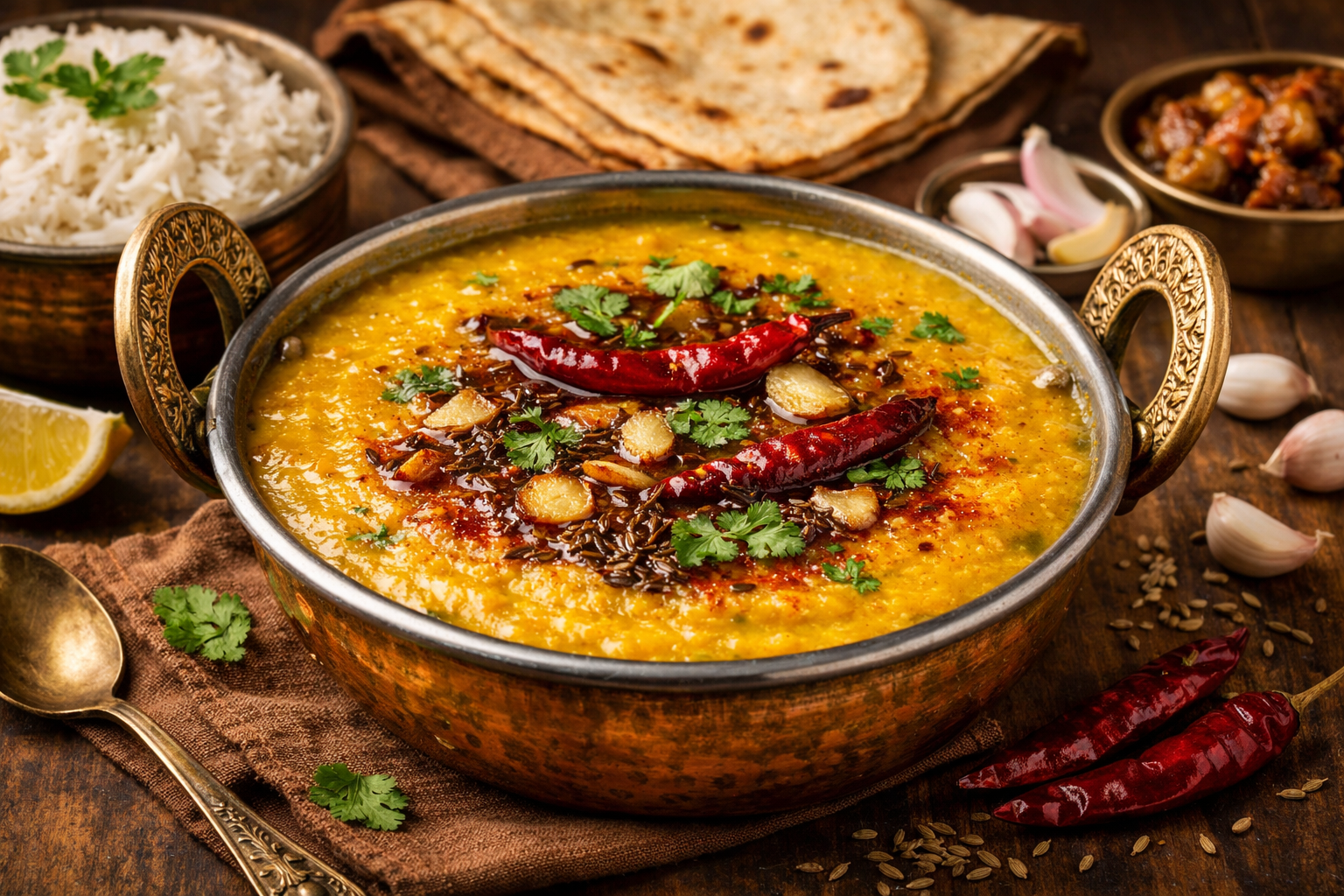
Dal Tadka is not just a recipe; it’s an emotion in Indian kitchens. From weekday lunches to festive family dinners, this humble lentil dish has a permanent place on the Indian dining table. Warm, nourishing, mildly spiced, and deeply comforting, Dal Tadka represents everything that home-style Indian food stands for.
Across India, dal is cooked in countless ways, but Dal Tadka holds a special charm because of its final tempering — a sizzling mix of ghee, spices, and aromatics poured over soft-cooked lentils. That dramatic moment when hot tadka hits the dal releases an aroma that instantly triggers hunger and nostalgia.
This article walks you through everything you need to know about Dal Tadka — its cultural roots, ingredients, cooking techniques, variations, nutrition, and expert tips — in a clear, engaging, and practical way.
What Is Dal Tadka?
Dal Tadka is an Indian lentil curry made primarily using yellow lentils such as toor dal or moong dal. The lentils are pressure-cooked until soft and creamy, then seasoned with salt, turmeric, and sometimes tomatoes or onions. What makes Dal Tadka special is the tempering, known as tadka or chaunk, added at the end.
The tadka is prepared separately by heating ghee or oil and blooming spices like cumin seeds, garlic, dried red chilies, and sometimes hing (asafoetida). This hot mixture is poured over the cooked dal, instantly enhancing its flavor and aroma.
Dal Tadka is commonly served as a main dish with steamed rice, jeera rice, roti, or paratha, making it a complete and satisfying Indian meal.
Dal Tadka in Indian Cuisine
Dal has been a cornerstone of Indian cuisine for thousands of years. Lentils are affordable, nourishing, and easy to cook, which makes them ideal for everyday meals across regions.
Dal Tadka is especially popular in North Indian households and restaurants. You’ll often find it on thali menus, dhaba meals, and home lunch spreads. Unlike heavier curries, Dal Tadka is light yet filling, making it suitable for both lunch and dinner.
In Indian cuisine, dal is often considered the soul of a meal — simple but deeply satisfying.
Key Ingredients That Define Dal Tadka
Dal Tadka relies on basic pantry staples, yet each ingredient plays a crucial role in flavor development.
Yellow lentils such as toor dal give the dish its creamy texture and mild sweetness. Turmeric adds color and earthy warmth, while salt balances the lentils’ natural blandness.
The tempering ingredients are where the magic happens. Ghee adds richness and depth, cumin seeds lend warmth and nuttiness, garlic brings bold aroma, and dried red chilies add subtle heat. Hing enhances digestion and provides a savory backbone.
Optional additions like onions, tomatoes, or green chilies can slightly change the flavor profile, but the core of Dal Tadka remains simple and honest.
Choosing the Right Dal for Best Results
The most commonly used lentil for Dal Tadka is toor dal, also known as pigeon peas. It cooks soft and creamy, making it ideal for this dish.
Moong dal is another excellent option if you prefer a lighter, easier-to-digest version. Some households even mix toor dal and moong dal for balanced texture and flavor.
Well-rinsed dal cooks more evenly and tastes cleaner. Always soak lentils briefly if time allows; it helps reduce cooking time and improves digestion.
Step-by-Step Cooking Process Explained
Dal Tadka may seem simple, but understanding each step helps you achieve restaurant-style results at home.
The lentils are first washed thoroughly until the water runs clear. This removes excess starch and impurities. They are then pressure-cooked with water, turmeric, and sometimes a little oil until completely soft. Properly cooked dal should mash easily with the back of a spoon.
Once cooked, the dal is gently simmered with salt and optional aromatics like onions or tomatoes. This stage allows flavors to blend and the texture to become creamy.
The final step is preparing the tadka. Ghee is heated until aromatic, then cumin seeds are added and allowed to crackle. Garlic and chilies are added next, followed by hing. This sizzling mixture is immediately poured over the dal, locking in the flavor.
Why the Tadka Makes All the Difference
The tadka is what elevates simple cooked lentils into Dal Tadka. Heating spices in fat releases essential oils, intensifying their aroma and flavor.
Ghee enhances richness and adds a traditional Indian taste. Garlic caramelizes slightly, giving a nutty depth. Cumin adds warmth, while red chilies provide a gentle smoky heat.
Pouring hot tadka over dal creates layers of flavor rather than mixing everything from the start. This technique is widely used in Indian cooking to maximize taste.
Restaurant Style Dal Tadka vs Home Style
Restaurant-style Dal Tadka is usually richer, slightly spicier, and finished with extra ghee. It may include onions, tomatoes, and cream for added body.
Home-style Dal Tadka focuses on simplicity. It is lighter, easier to digest, and often made with minimal spices and oil. Both styles are delicious, and you can easily customize the dish based on your preference.
For everyday meals, home-style Dal Tadka is ideal. For guests or special occasions, a richer restaurant-style version works beautifully.
Flavor Variations You Can Try
Dal Tadka is versatile and adapts well to different taste preferences. Adding tomatoes brings mild tanginess, while onions add sweetness and depth.
Some regional versions include mustard seeds in the tempering for a sharper flavor. In South India, curry leaves may be added for aroma.
Smoked Dal Tadka, made using the dhungar method, adds a subtle charcoal flavor that enhances richness without overpowering the dish.
Nutrition and Health Benefits
Dal Tadka is not just comforting; it is highly nutritious. Lentils are an excellent plant-based protein source, making this dish ideal for vegetarians.
Dal is rich in dietary fiber, which supports digestion and gut health. It also provides essential minerals like iron, potassium, and magnesium.
Using ghee in moderation adds healthy fats that improve nutrient absorption. When paired with rice or roti, Dal Tadka becomes a balanced meal providing protein, carbohydrates, and fats.
Common Mistakes to Avoid
Overcooking dal until watery can dilute flavor. Undercooked lentils, on the other hand, result in grainy texture.
Adding tadka too early reduces its aroma. Always add it just before serving for maximum impact.
Using too many spices can overpower the natural taste of dal. Dal Tadka shines when flavors are balanced and subtle.
Best Ways to Serve Dal Tadka
Dal Tadka pairs wonderfully with steamed basmati rice or jeera rice for a comforting meal. It also goes well with roti, naan, or paratha.
Adding a side of salad, pickle, or papad completes the traditional Indian thali experience. Dal Tadka works equally well for lunch and dinner.
Conclusion
Dal Tadka proves that simple food can be deeply satisfying. With humble ingredients and thoughtful cooking, this dish delivers warmth, nutrition, and nostalgia in every spoonful.
Whether you’re cooking for family, guests, or yourself, Dal Tadka is a reliable, wholesome choice that never disappoints. Try it once, and it will become a regular part of your meal rotation.
If you enjoyed this recipe guide, explore more Indian cuisine and comforting meal ideas to make everyday cooking joyful and stress-free.
FAQs About Da l Tadka
1. Which dal is best for Dal Tadka?
Toor dal is the most popular choice due to its creamy texture, but moong dal also works well for a lighter version.
2. Can Dal Tadka be made without ghee?
Yes, oil can be used instead, but ghee provides authentic flavor and richness.
3. Is Dal Tadka healthy for daily meals?
Absolutely. It is high in protein, fiber, and essential nutrients, making it suitable for everyday consumption.
4. Can I make Dal Tadka vegan?
Yes. Simply replace ghee with a neutral oil or plant-based butter.
5. Why does my dal taste bland?
Lack of salt, under-seasoning, or weak tadka can result in bland dal. Proper seasoning and fresh spices make a big difference.
6. Can Dal Tadka be stored?
Dal Tadka keeps well in the refrigerator for up to two days. Reheat gently with a little water.
7. What meal is Dal Tadka best for?
Dal Tadka works well for both lunch and dinner as part of a complete Indian meal.
8. Is Dal Tadka suitable for kids?
Yes, its mild flavor and soft texture make it kid-friendly and easy to digest.