If diets truly worked the way they promise, most of us wouldn’t still be searching for answers.
Think about it for a moment. How many times have you decided, “This time I’ll do it properly”? How many meal plans have you saved, screenshots you’ve taken, rules you’ve tried to follow with full sincerity—only to abandon them weeks later?
The issue isn’t effort.
The issue isn’t knowledge.
And it definitely isn’t laziness.
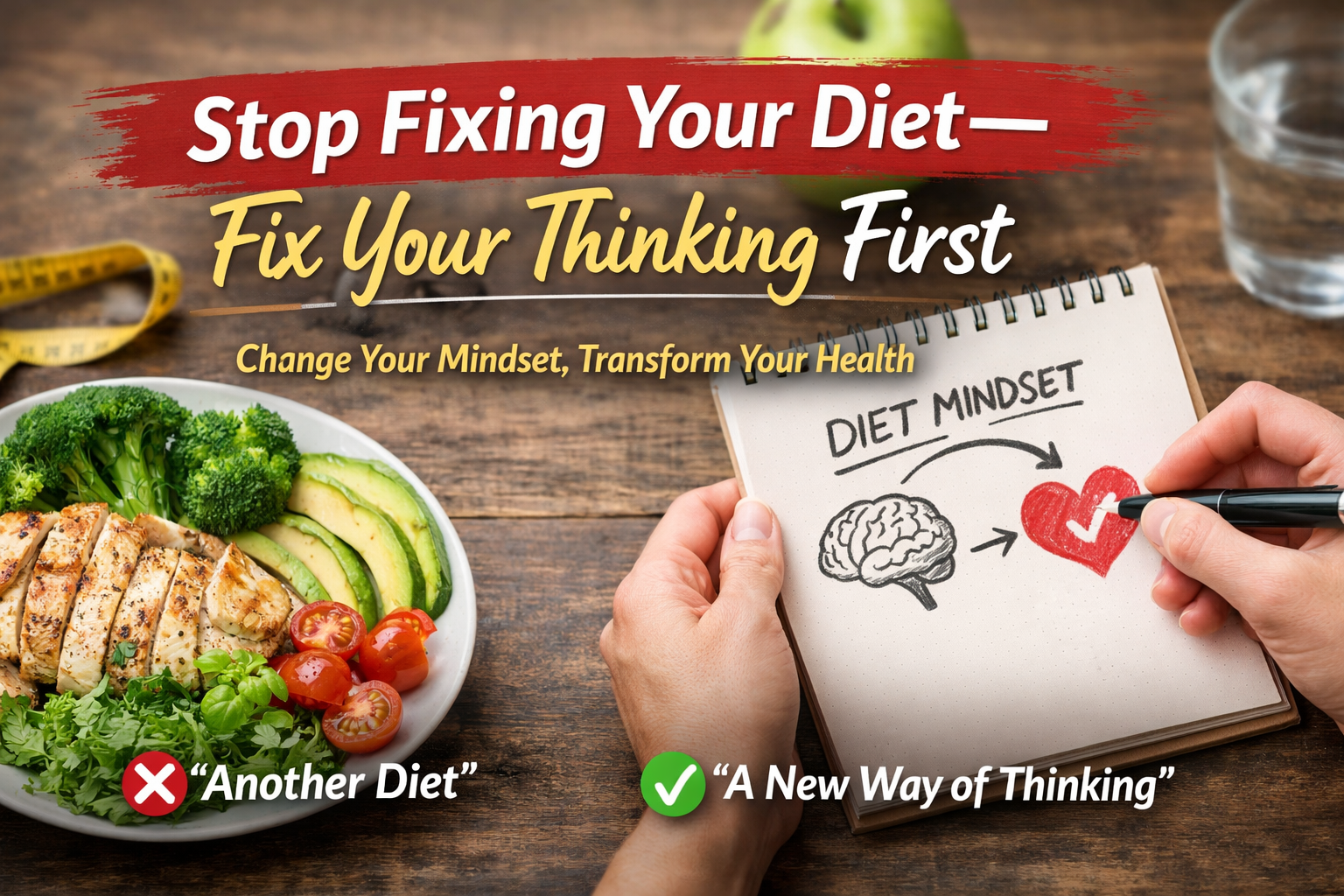
The real problem is that we’ve been trained to fix food before fixing the thinking behind it.
Until that changes, every new diet will feel exciting at first… and exhausting soon after.
When Eating Stops Being Simple
At some point, eating stopped being a natural act and became a daily mental workout.
You start your day with good intentions. You choose the “right” foods. You avoid sugar, fried items, carbs, or whatever the current villain happens to be. And yet, by evening, something feels off. Hunger doesn’t always make sense. Cravings appear out of nowhere. One unplanned snack triggers guilt, and guilt often leads to overeating.
This cycle isn’t random.
Most people today don’t struggle because they eat too much junk. They struggle because food has become emotional, moral, and stressful.
Eating now comes with:
- Constant self-judgment
- Fear of gaining weight
- Pressure to eat perfectly
- Confusion from conflicting advice
When food feels heavy in the mind, it becomes heavy in the body too.
Why Diets Feel Like They Work—Until They Don’t
Most diets are designed to give quick clarity.
They tell you:
- What to eat
- What to avoid
- When to eat
- How much to eat
That structure feels comforting, especially when you’re overwhelmed. In the beginning, results often show up. Weight drops. Energy feels higher. Confidence improves.
But here’s the part rarely discussed.
Diets rely heavily on external control—rules, plans, tracking, restrictions. They don’t teach you how to function without those supports. So the moment real life interferes—stress, travel, celebrations, illness, workload—the system breaks.
And when it breaks, people don’t blame the system.
They blame themselves.
The Silent Damage of Diet Culture
Repeated dieting doesn’t just affect the body. It quietly reshapes the way you think.
Over time, many people develop:
- Fear of certain foods
- Obsession with calories or portions
- Guilt after eating
- All-or-nothing thinking
- A sense of failure around health
This is why so many people say, “I know what to do, I just can’t stick to it.”
The issue isn’t sticking to a plan.
It’s living inside a mindset that treats food like a test you’re always about to fail.
The Real Reason Healthy Eating Feels Hard
Here’s an important truth:
Eating choices are rarely about food alone.
They’re influenced by:
- Stress levels
- Sleep quality
- Emotional state
- Past experiences
- Beliefs about self-control
You don’t crave comfort foods because you’re weak.
You crave them because your brain is seeking relief.
No meal plan can solve emotional exhaustion.
A Quiet Personal Realization
For a long time, I believed discipline was the answer.
I followed plans carefully. I avoided foods I enjoyed. I told myself that strictness meant commitment. And for a while, it worked. Until one stressful phase changed everything.
One imperfect day felt like failure. One failure led to overeating. And overeating led to quitting entirely.
What changed my relationship with food wasn’t learning something new about nutrition. It was realizing that my thinking was too rigid to survive real life.
The moment I allowed flexibility instead of perfection, consistency became possible. Food stopped being something I had to control and became something I could manage calmly.
The Mindset Shift That Changes Everything
Here’s the shift that most people miss:
Healthy eating isn’t about control.
It’s about trust.
Trusting that:
- One meal doesn’t ruin progress
- Your body doesn’t need punishment
- Balance matters more than extremes
- You can return to healthy choices without restarting
When you stop treating food as a reward or a crime, it loses emotional power.
And when food loses power, it stops controlling behavior.
Diet Mindset vs Healthy Eating Mindset
Many people don’t realize they’re stuck in “diet mode” even when they’re not dieting.
A diet mindset sounds like:
- “I’m being good today”
- “I messed up yesterday”
- “I’ll start fresh next week”
- “I can’t eat this”
A healthy eating mindset sounds like:
- “This is how I eat most days”
- “I choose what helps me feel better”
- “One meal doesn’t define me”
- “I return to balance naturally”
The difference may seem subtle, but its impact is massive.
Why Sustainable Weight Loss Starts in the Brain
Research consistently shows that long-term weight management is driven more by behavior and mindset than by diet type.
People who maintain results tend to:
- Eat consistently, not perfectly
- Respond calmly to setbacks
- Focus on habits, not rules
- Build identity-based behaviors
They don’t rely on motivation. They rely on systems.
And systems begin with thinking.
The Role of Habit Over Willpower
Willpower is unreliable. Habits are not.
Every eating habit follows a simple loop:
- A trigger (stress, time, emotion)
- A behavior (eating)
- A reward (comfort, relief, pleasure)
Instead of removing food, sustainable change comes from adjusting the trigger or changing the response.
That requires awareness—not restriction.
Why Mindful Eating Works When Diets Don’t
Mindful eating isn’t about eating slowly for the sake of it. It’s about reconnecting with signals we’ve learned to ignore.
It teaches you to:
- Notice hunger before eating
- Recognize fullness before overeating
- Enjoy food without guilt
- Stop eating when satisfied
Studies show mindful eating can reduce binge eating, improve digestion, and support sustainable weight loss—without counting calories.
It works because it restores trust between you and your body.
Stop Chasing Perfect Days
One of the biggest reasons people quit is the belief that progress must be clean and uninterrupted.
But real health looks like:
- Mostly nourishing meals
- Occasional indulgences
- Missed workouts
- Busy weeks
- Getting back on track without drama
Progress isn’t fragile.
It doesn’t disappear because of one meal.
What Actually Helps in Real Life
Instead of rigid plans, focus on flexible principles:
- Eat foods that make you feel energized
- Include vegetables, fruits, and protein regularly
- Drink enough water
- Eat without constant distraction when possible
- Enjoy food socially without guilt
These principles adapt to real life. Diets don’t.
Why Slower Change Lasts Longer
Mindset-based change often feels slower at first. But it builds something diets never do—resilience.
You learn how to:
- Handle holidays
- Manage stress eating
- Travel without anxiety
- Eat intuitively over time
And once those skills develop, you don’t “fall off track.”
You simply adjust.
The Freedom on the Other Side
When thinking improves, eating changes quietly.
You don’t obsess as much.
You don’t feel guilty after meals.
You don’t restart every Monday.
Healthy choices feel normal—not forced.
That’s the kind of change that lasts years, not weeks.
A Thought to Carry Forward
You don’t need another diet.
You don’t need harsher rules.
You don’t need to fix yourself.
You need to change the way you talk to yourself about food.
Fix your thinking first.
Your eating will follow.
And this time, it won’t feel like a struggle—it will feel like balance.