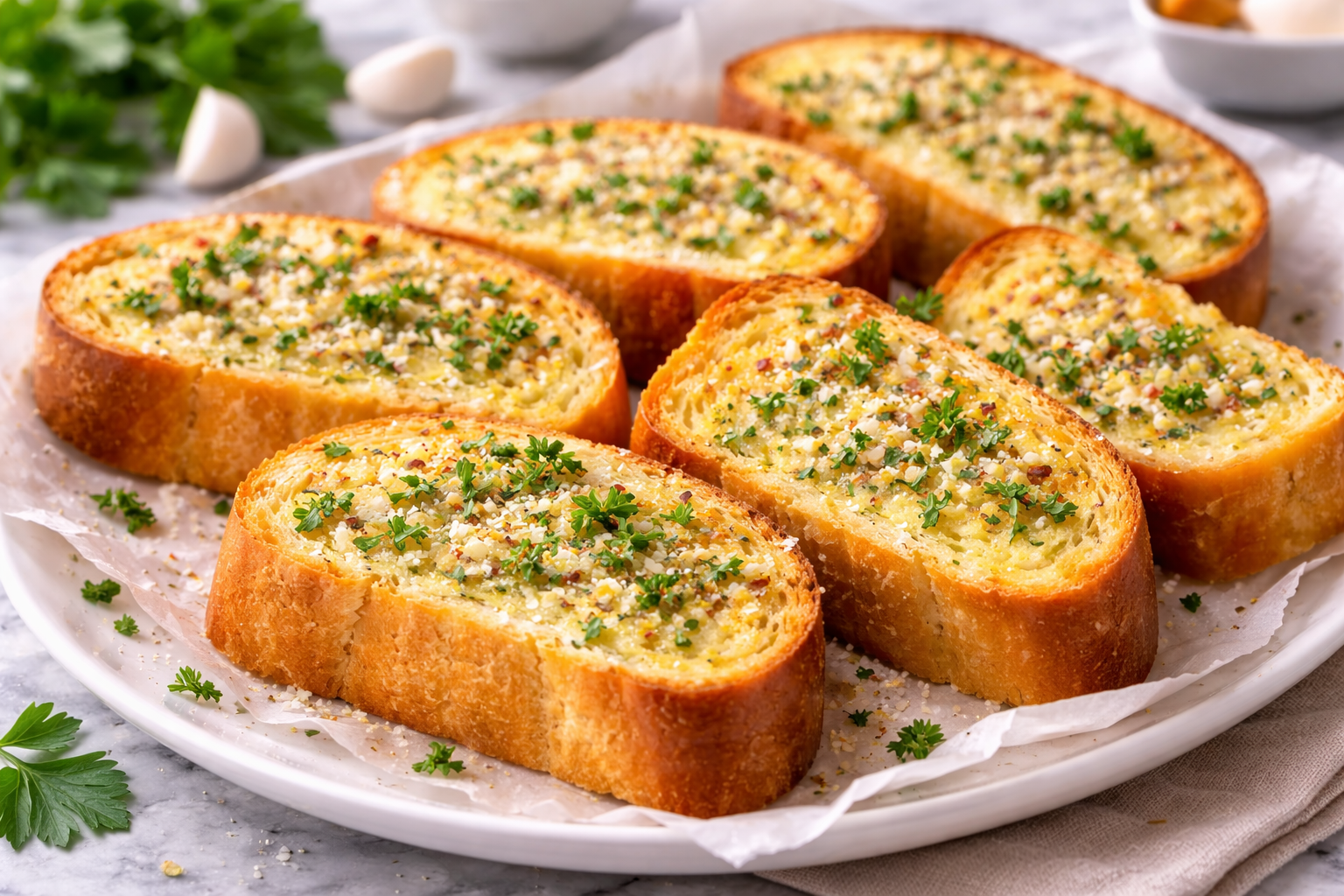
There are few foods that trigger instant comfort and craving the way garlic bread does. The moment warm, buttery garlic bread hits the table, conversations pause, hands reach out, and the aroma alone feels like a reward. Whether it’s served alongside pasta, soup, pizza, or enjoyed on its own, garlic bread has earned its place as a universal favorite across cultures and cuisines.
What makes garlic bread truly special is its simplicity. It doesn’t rely on fancy ingredients or complicated techniques, yet when done right, it delivers bold flavor, perfect texture, and that irresistible combination of crisp edges and a soft, melt-in-your-mouth center. Unfortunately, many homemade versions fall flat—either too dry, too greasy, or lacking real garlic flavor.
This guide walks you through everything you need to know to make the best garlic bread at home, with expert tips, flavor variations, baking methods, and troubleshooting advice. By the end, you’ll know exactly how to make garlic bread that rivals your favorite restaurant version—every single time.
What Makes Garlic Bread Truly Great
Great garlic bread is all about balance. The bread must be sturdy enough to hold butter without becoming soggy, yet tender enough inside to soak up flavor. The garlic should be bold but not overpowering, and the butter should enhance rather than drown the bread.
Texture plays a huge role as well. The outside should be golden and lightly crisp, while the inside remains fluffy and rich. Achieving this contrast is what separates average garlic bread from unforgettable garlic bread.
Fresh ingredients also matter more than most people realize. Fresh garlic delivers a sharper, cleaner flavor compared to powders alone, and real butter provides richness that margarine simply can’t replicate. Even the herbs you choose—whether fresh or dried—add layers of aroma and depth.
Choosing the Right Bread
The foundation of any great garlic bread is, quite literally, the bread itself. Not all bread works equally well, and the wrong choice can lead to disappointing results.
French bread and Italian loaves are the most popular choices because they strike the perfect balance between a crisp crust and a soft interior. A baguette works beautifully for thinner, crunchier slices, while a wider Italian loaf creates thicker pieces with a pillowy center.
Softer sandwich bread is generally not ideal, as it absorbs butter too quickly and becomes soggy. On the other hand, extremely dense breads can turn tough when baked. Slightly stale bread is actually a secret advantage—it absorbs flavor better without losing structure.
Garlic: Fresh vs Roasted vs Powder
Garlic is the star of the show, and how you use it dramatically affects the final flavor. Fresh garlic provides sharpness and intensity, making it ideal for classic garlic bread lovers. Minced finely, it distributes evenly and infuses the butter with bold aroma.
Roasted garlic offers a completely different experience. It’s sweeter, milder, and slightly caramelized, creating a deeper, more mellow flavor that feels luxurious and rich. Roasted garlic bread is perfect if you prefer subtle garlic notes without harshness.
Garlic powder can be used as a supporting ingredient but should never replace fresh garlic entirely. When combined thoughtfully, it enhances the overall garlic flavor without overpowering it.
The Role of Butter and Fat
Butter is what gives garlic bread its signature richness. Unsalted butter is usually preferred, as it allows better control over seasoning. Softened butter blends easily with garlic and herbs, ensuring even coverage across the bread.
Some cooks add a small amount of olive oil to the butter mixture. This helps the butter spread more smoothly and prevents it from burning too quickly in the oven. The result is a more evenly toasted surface with deeper flavor.
Whipped butter can also be used for a lighter texture, while vegan butter alternatives work well for dairy-free versions when paired with olive oil.
Essential Ingredients
Ingredients are one of the few places where a simple list improves clarity.
- Fresh French or Italian bread
- Unsalted butter, softened
- Fresh garlic, finely minced
- Olive oil (optional)
- Fresh parsley or dried herbs
- Salt to taste
- Optional Parmesan or mozzarella for cheesy garlic bread
Each ingredient plays a specific role, and skipping or substituting carelessly can affect the final result.
How to Make Garlic Bread Step by Step
Start by preheating your oven to a moderately high temperature, usually around 375°F (190°C). This ensures the bread toasts evenly without drying out.
Slice the bread lengthwise or into thick pieces, depending on your preference. Place it cut-side up on a baking tray lined with parchment paper.
In a bowl, mix softened butter with minced garlic, salt, and herbs until smooth. If using olive oil, blend it in at this stage. Spread the mixture generously across the bread, making sure to reach the edges where crispness matters most.
Bake the bread uncovered until the edges turn golden and the butter bubbles slightly. For extra crispness, finish under the broiler for a short burst, watching closely to avoid burning.
Once baked, allow the garlic bread to rest for a minute before slicing. This helps the butter settle and prevents it from running off too quickly.
Cheesy Garlic Bread Variation
Cheesy garlic bread transforms a classic side into a hearty, indulgent dish. Adding cheese introduces richness and stretch while complementing the garlic butter beautifully.
Parmesan adds sharp, nutty flavor and crisps nicely under heat, while mozzarella provides gooey texture. For best results, sprinkle cheese over the bread during the final few minutes of baking to prevent over-browning.
Blending cheeses creates a more complex flavor profile and adds visual appeal when served fresh from the oven.
Alternative Cooking Methods
Oven baking is traditional, but garlic bread can be made using other methods with excellent results.
In an air fryer, garlic bread cooks faster and develops an extra-crispy exterior. Lower temperatures and shorter cooking times prevent burning while still achieving golden perfection.
On the stovetop, garlic bread can be toasted in a skillet with a lid. This method creates a buttery crust while gently warming the interior, making it perfect for small batches.
Grilling garlic bread adds smoky flavor and charred edges, making it ideal for outdoor meals and barbecues.
Common Mistakes to Avoid
One of the most common mistakes is using butter that’s too cold, which leads to uneven spreading and dry patches. Another is overloading the bread with butter, causing sogginess instead of crispness.
Burning garlic is another issue. Garlic cooks faster than bread, so extremely high heat or prolonged broiling can make it bitter. Timing and temperature control are key.
Skipping seasoning entirely can also result in bland bread. A small amount of salt enhances all the flavors and brings the dish together.
Serving Ideas and Pairings
Garlic bread pairs naturally with pasta dishes like spaghetti, lasagna, and Alfredo. It also complements soups such as tomato basil, minestrone, or creamy mushroom.
For casual meals, garlic bread works beautifully alongside salads, grilled vegetables, or even as a base for open-faced sandwiches. Leftover slices can be repurposed into garlic bread croutons or used for savory breakfast toasts.
Storage and Reheating Tips
Garlic bread is best enjoyed fresh, but leftovers can be stored properly for later use. Wrap cooled bread tightly in foil and refrigerate for up to three days.
To reheat, place the bread in the oven at a low temperature until warmed through. Avoid microwaving, as it makes the bread chewy and unevenly heated.
Frozen garlic bread can be baked directly from frozen with excellent results, making it a convenient make-ahead option.
Conclusion
Garlic bread may seem simple, but when made with care, it becomes something truly special. By choosing the right bread, using fresh garlic, balancing butter, and baking with intention, you can create garlic bread that’s crisp, flavorful, and unforgettable.
Once you master the basics, experimenting with cheeses, herbs, and cooking methods becomes effortless. Whether you’re serving it at a family dinner or enjoying it as a late-night snack, homemade garlic bread always delivers comfort and satisfaction.
Try this recipe today and experience the difference that thoughtful preparation makes. Your kitchen will smell incredible—and your guests will ask for seconds.
FAQs
Can I make garlic bread ahead of time?
Yes, garlic bread can be prepared in advance and stored in the refrigerator or freezer. Bake it just before serving for the best texture and flavor.
What’s the best bread for garlic bread?
French and Italian loaves work best because they offer a crisp crust with a soft interior that absorbs butter without becoming soggy.
Can I use garlic powder instead of fresh garlic?
Garlic powder can be used, but fresh garlic provides a more vibrant, authentic flavor. A combination of both works well.
How do I keep garlic bread from getting soggy?
Use slightly stale bread, avoid over-buttering, and bake at the proper temperature to ensure crisp edges.
Is garlic bread better wrapped or unwrapped in the oven?
Unwrapped garlic bread crisps better. Wrapping traps steam, which can soften the bread too much.
Can garlic bread be made vegan?
Absolutely. Vegan butter and olive oil create excellent results without sacrificing flavor or texture.