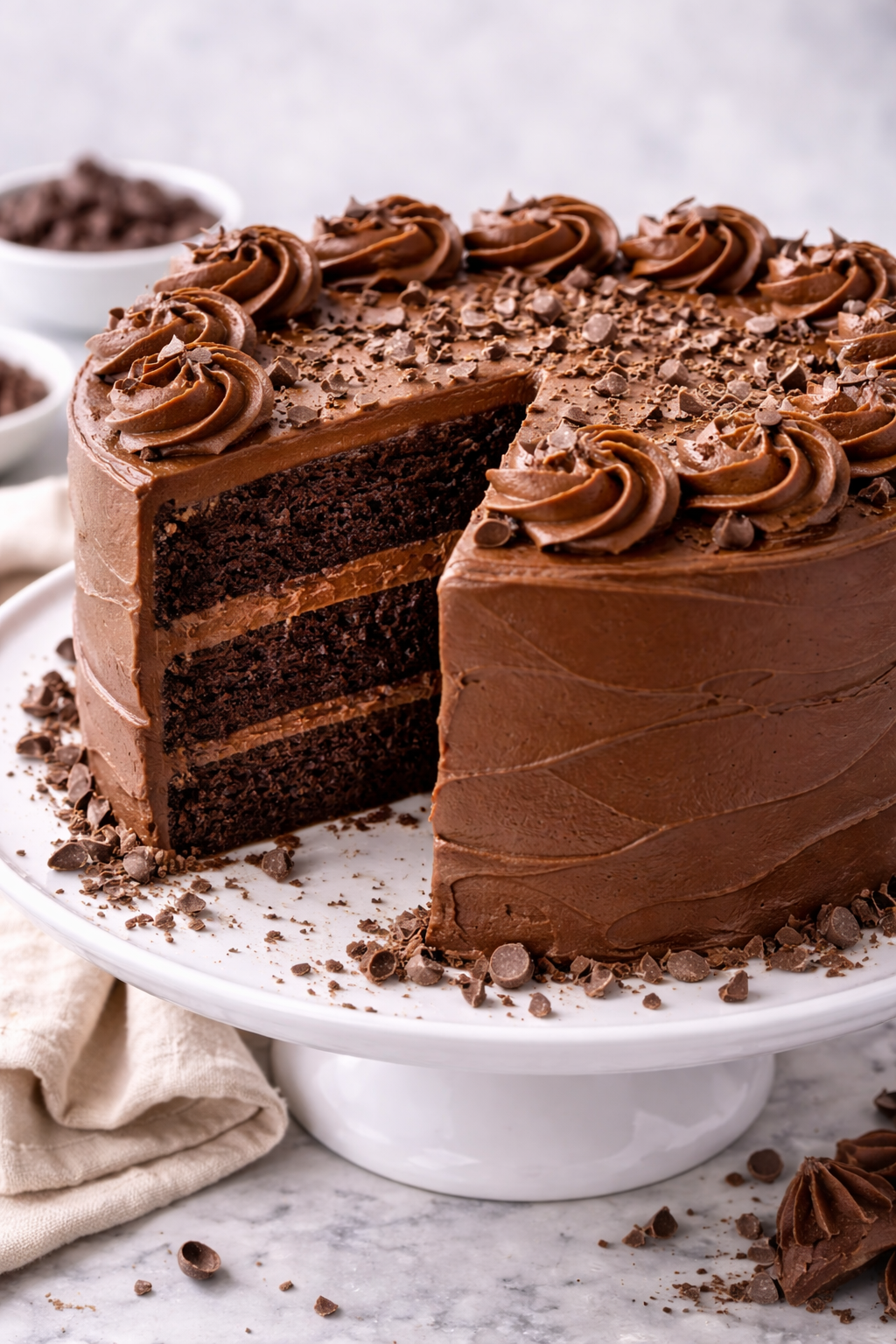
There is chocolate cake, and then there is ultimate chocolate cake. The kind that feels indulgent from the very first bite, where the crumb is tender, the flavor is bold but not bitter, and the frosting melts seamlessly into the cake. This is the cake people remember long after the plates are cleared. It’s the cake requested for birthdays, celebrations, and “just because” moments when only chocolate will do.
Many chocolate cakes promise richness but fall short. Some turn out dry, others overly sweet, and a few lack the deep chocolate flavor that true chocolate lovers crave. The ultimate chocolate cake strikes a balance. It is moist without being dense, rich without being overwhelming, and indulgent without feeling heavy.
This guide walks you through everything you need to know to make a bakery-style chocolate cake at home. From understanding why certain ingredients matter to mastering baking techniques that guarantee success, this is a complete, practical, and confidence-building resource for home bakers of all levels.
What Makes a Chocolate Cake “Ultimate”
An ultimate chocolate cake isn’t about complexity—it’s about precision. Every ingredient has a purpose, and every step contributes to texture and flavor.
The cocoa flavor should be deep and rounded, not flat or sugary. The crumb should be soft and moist for days, not just fresh from the oven. The frosting should complement the cake rather than overpower it. When these elements work together, the result feels luxurious without being complicated.
The difference often comes down to small choices: the type of cocoa powder, the balance of fats, the use of liquid ingredients like milk or coffee, and proper mixing methods. Understanding these details transforms an ordinary chocolate cake into something extraordinary.
The Science Behind a Moist Chocolate Cake
Moisture in chocolate cake comes from more than just liquid. It’s the interaction between fats, sugars, and flour that creates tenderness.
Oil is often used alongside butter because oil remains liquid at room temperature, keeping the cake soft even after cooling. Eggs add structure while also contributing moisture. Sugar doesn’t just sweeten; it binds water, slowing down moisture loss.
Another secret weapon is hot liquid, often coffee or hot water. This helps bloom cocoa powder, intensifying chocolate flavor while creating a smoother batter. Coffee doesn’t make the cake taste like coffee—it simply deepens the chocolate notes.
Choosing the Right Chocolate Ingredients
Chocolate flavor is the heart of this recipe, and quality matters more here than almost anywhere else.
Natural cocoa powder gives a lighter, sharper chocolate taste, while Dutch-processed cocoa offers a darker color and smoother flavor. Either can work, but consistency matters. Mixing types without adjusting leavening can affect rise.
Chocolate used in frosting should be real chocolate, not compound or flavored coatings. Dark chocolate balances sweetness best, especially when paired with rich cake layers.
Using good cocoa doesn’t mean expensive—it means fresh, unsweetened, and stored properly to preserve aroma and depth.
Essential Ingredients
Ingredients are one place where a simple list improves clarity without interrupting flow.
- All-purpose flour
- Unsweetened cocoa powder
- Baking powder and baking soda
- Granulated sugar
- Brown sugar
- Eggs
- Neutral oil
- Butter
- Milk or buttermilk
- Hot coffee or hot water
- Vanilla extract
- Salt
Each ingredient works together to build structure, moisture, and flavor. Removing or substituting without understanding the role can change the final result significantly.
Preparing Your Kitchen for Success
Before mixing begins, preparation sets the tone for a smooth baking experience. Measuring ingredients accurately ensures consistent results. Using room-temperature eggs and dairy allows the batter to emulsify properly, leading to a smoother texture.
Greasing and lining cake pans prevents sticking and promotes even baking. Preheating the oven fully before baking ensures proper rise and prevents dense layers.
These small steps may feel routine, but they are often what separate reliable recipes from disappointing ones.
How to Make the Ultimate Chocolate Cake
The process begins by combining dry ingredients thoroughly. This ensures even distribution of cocoa and leavening, preventing pockets of bitterness or uneven rise.
Wet ingredients are mixed separately, allowing fats and sugars to blend smoothly. When combined with the dry ingredients, mixing should be gentle and controlled. Overmixing develops gluten, which can make the cake tough.
Hot liquid is added last, slowly, transforming the batter into a smooth, pourable consistency. The batter may seem thin, but this is exactly what creates a moist, tender crumb.
Baking time depends on pan size and oven accuracy. Cakes are done when the centers spring back lightly and a toothpick emerges with a few moist crumbs, not wet batter.
Cooling and Handling Cake Layers
Cooling is not just a waiting period—it’s an active part of the process. Cakes should cool briefly in their pans before being turned out onto racks. This allows structure to set while preventing soggy bottoms.
Fully cooled cakes are easier to frost and less likely to crumble. Rushing this step can cause frosting to melt or layers to slide.
For best results, chilling layers slightly before frosting makes assembly cleaner and more precise.
Chocolate Frosting That Completes the Cake
The frosting should enhance the cake, not compete with it. A smooth, creamy chocolate frosting adds richness while sealing in moisture.
Butter provides structure, while melted chocolate deepens flavor. Powdered sugar sweetens and stabilizes, and cream or milk adjusts consistency.
The key is balance. Over-whipped frosting becomes airy and dry, while under-mixed frosting lacks structure. The ideal texture spreads smoothly and holds its shape without stiffness.
Assembling the Cake Like a Pro
Assembling the cake is where it transforms from baked layers into a show-stopping dessert. Even layers create visual appeal and balanced bites.
Applying a thin crumb coat locks in loose crumbs before the final layer of frosting. This step creates a clean, polished finish.
Once frosted, the cake can be left smooth or textured with simple swirls. Perfection isn’t about flawless surfaces—it’s about confident, intentional presentation.
Variations and Flavor Enhancements
An ultimate chocolate cake is versatile and welcomes customization. Adding espresso powder intensifies chocolate flavor without bitterness. A hint of orange zest introduces brightness and contrast.
For a darker profile, replacing some sugar with brown sugar adds depth and moisture. For a lighter version, whipped chocolate ganache creates a softer finish.
Fillings such as chocolate mousse, raspberry compote, or salted caramel elevate the cake for special occasions without complicating the base recipe.
Common Chocolate Cake Mistakes and How to Avoid Them
Dry cake often results from overbaking or inaccurate measurements. Using a kitchen scale improves consistency.
Flat cakes usually indicate expired leavening or overmixing. Testing baking powder and soda before use prevents disappointment.
Cracked tops can result from oven temperatures that are too high. An oven thermometer helps ensure accuracy.
Understanding why problems happen is the fastest way to improve baking confidence.
Storage and Make-Ahead Tips
Chocolate cake stores exceptionally well when handled correctly. At room temperature, it stays moist for up to two days when covered properly.
Refrigeration extends shelf life but requires careful wrapping to prevent drying. Freezing unfrosted layers is an excellent make-ahead strategy, preserving freshness for weeks.
Proper storage allows you to plan ahead without sacrificing quality.
Why This Chocolate Cake Works Every Time
This recipe works because it respects balance. Moisture, structure, sweetness, and chocolate intensity are carefully aligned. The method is forgiving enough for beginners but refined enough to satisfy experienced bakers.
Instead of relying on gimmicks, it uses proven techniques that consistently produce excellent results. That reliability is what makes it truly ultimate.
Conclusion
An ultimate chocolate cake isn’t about extravagance—it’s about intention. When each ingredient is chosen thoughtfully and each step is followed with care, the result is a cake that feels special every time it’s served.
Whether you’re baking for a celebration or simply treating yourself, this chocolate cake delivers deep flavor, soft texture, and lasting satisfaction. Once you master it, it becomes a recipe you return to again and again.
Bake it once, and it will quickly earn a permanent place in your kitchen.
FAQs
What makes this chocolate cake extra moist?
The combination of oil, sugar, and hot liquid helps retain moisture while creating a tender crumb that stays soft for days.
Can I make this cake without coffee?
Yes. Hot water can be used instead, though coffee enhances the chocolate flavor without tasting like coffee.
Which cocoa powder is best for chocolate cake?
Both natural and Dutch-processed cocoa work, but consistency matters. Choose one and adjust leavening accordingly.
Can I make this cake ahead of time?
Absolutely. Cake layers freeze well and can be frosted later without losing quality.
How do I prevent my cake from sinking?
Avoid overmixing and ensure your oven is fully preheated before baking.
Can this recipe be used for cupcakes?
Yes. The batter adapts well to cupcakes with adjusted baking time.