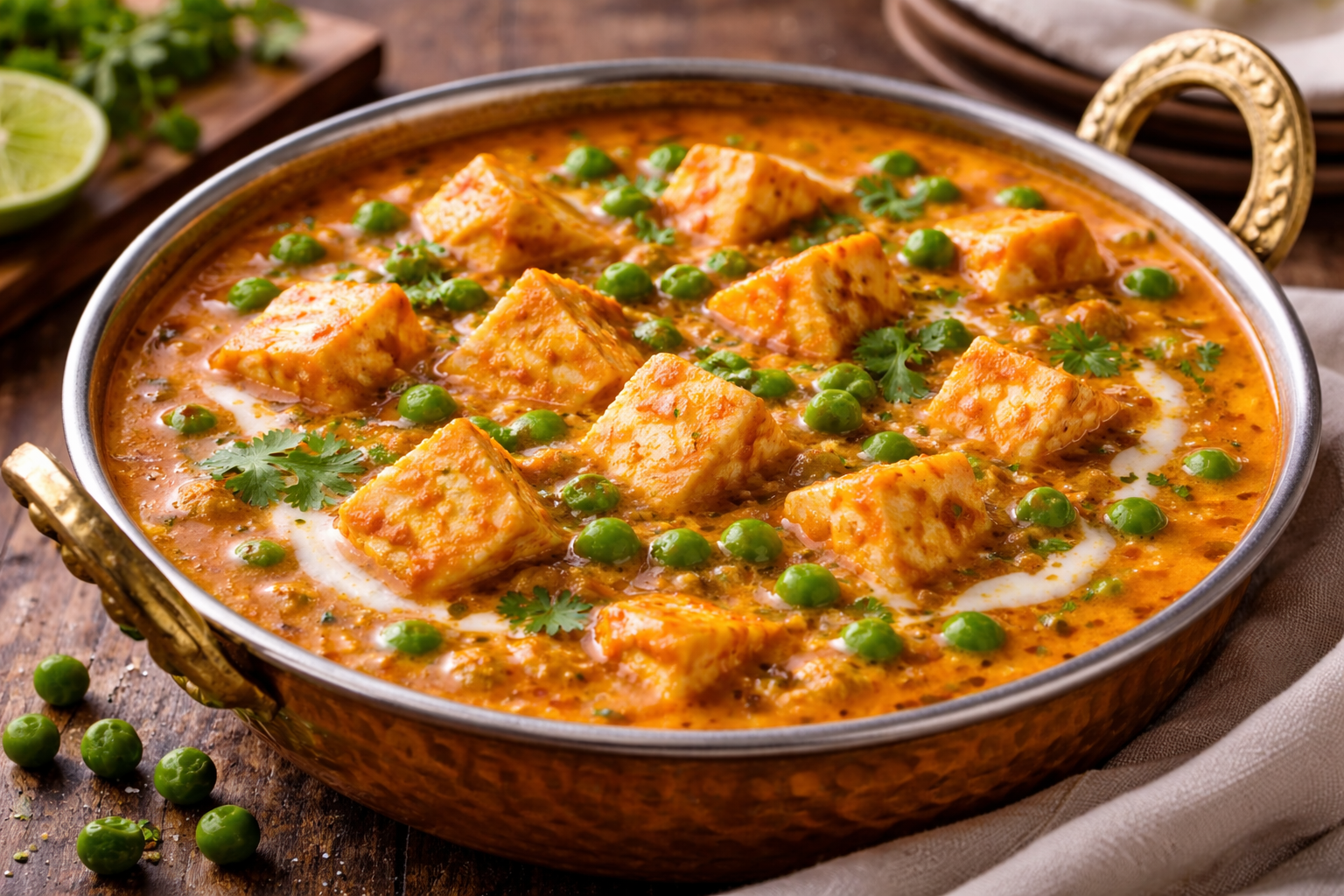
Matar paneer is one of those dishes that feels instantly familiar, no matter where you are in India. It shows up on wedding menus, restaurant thalis, festive lunches, and simple home-cooked dinners alike. The combination of soft paneer, sweet green peas, and a gently spiced tomato gravy makes this curry universally loved.
What truly sets matar paneer apart is its balance. It is rich but not heavy, flavorful but not overpowering, and comforting without being boring. When prepared correctly, every bite offers softness from paneer, freshness from peas, and warmth from spices—all tied together by a smooth, velvety gravy.
This recipe focuses on a restaurant-style matar paneer, the kind you order again and again because it feels indulgent yet homely. You’ll learn not just how to make it, but why each step matters, how to adjust flavors, and how to avoid common mistakes that can ruin the dish.
What Makes Matar Paneer So Popular?
Matar paneer belongs to the heart of North Indian cuisine, especially Punjabi cooking. It gained popularity because it uses everyday ingredients but delivers a rich, satisfying result. Paneer provides protein and creaminess, peas add natural sweetness, and tomatoes form a tangy base that carries spices beautifully.
Unlike overly spicy curries, matar paneer appeals to all age groups. Children love its mildness, adults appreciate its depth, and it works equally well for everyday meals and special occasions. It’s also versatile—you can make it creamy, spicy, vegan, or even satvik depending on your preference.
Understanding the Flavor Profile
The flavor of matar paneer is layered, not loud. The tomatoes provide gentle tanginess, onions add sweetness and body, and spices enhance rather than dominate. Cream or cashew paste adds richness, but it should never mask the tomato base.
The goal is harmony. No single ingredient should overpower the others. When cooked correctly, the gravy tastes rounded, slightly sweet, mildly spicy, and deeply comforting.
Ingredients Used for Matar Paneer
(Points are used here only because ingredients need clarity.)
- Paneer (fresh, soft cubes)
- Green peas (fresh or frozen)
- Ripe red tomatoes (pureed)
- Onions (finely chopped or pureed)
- Ginger-garlic paste
- Cumin seeds
- Coriander powder
- Kashmiri red chili powder
- Turmeric powder
- Garam masala
- Fresh cream or cashew paste
- Oil or butter
- Salt
- Water as required
Choosing the Right Paneer
Paneer plays the starring role in this dish, so quality matters. Fresh homemade paneer gives the softest texture, but good-quality store-bought paneer also works well. If using packaged paneer, soaking it in warm salted water for ten minutes helps soften it and prevents chewiness during cooking.
Always add paneer towards the end of cooking. Overcooking paneer is the most common mistake and leads to a rubbery texture.
Tomatoes: The Backbone of the Gravy
Ripe tomatoes are essential for a good matar paneer. Sour or underripe tomatoes can throw off the entire flavor balance. The tomatoes should be cooked thoroughly until oil begins to separate, which removes raw acidity and creates a deep, rich base.
This step cannot be rushed. Proper tomato cooking is what gives restaurant-style gravies their smooth texture and rounded taste.
Step-by-Step Method to Make Matar Paneer
(Points are used here only because step clarity is required.)
- Heat oil or butter in a heavy-bottomed pan and add cumin seeds. Let them crackle gently.
- Add finely chopped onions and sauté until golden and aromatic.
- Stir in ginger-garlic paste and cook until the raw smell disappears.
- Add tomato puree and cook on medium heat until the mixture thickens and releases oil.
- Mix in turmeric, coriander powder, Kashmiri red chili powder, and salt. Cook gently to bloom the spices.
- Add green peas and some water. Cover and simmer until the peas are tender.
- Gently add paneer cubes and stir carefully.
- Finish with cream or cashew paste and garam masala. Simmer for a few minutes and turn off the heat.
Achieving Restaurant-Style Texture
Restaurants achieve a silky texture by blending onions and tomatoes or straining the gravy. At home, you can achieve similar results by finely pureeing tomatoes and chopping onions very small or blending them before cooking.
Another secret is patience. Letting the gravy cook slowly develops flavor and improves consistency. Quick cooking often leads to raw-tasting curry.
Variations of Matar Paneer
Matar paneer is incredibly adaptable. A Punjabi-style version uses more butter and slightly bolder spices. A creamy restaurant version relies on cream or cashew paste for richness. For a vegan version, paneer can be replaced with tofu and dairy cream with cashew cream or coconut milk.
Some households also prepare a no-onion, no-garlic version using only tomatoes, ginger, and whole spices, especially during fasting or religious occasions.
Matar Paneer vs Shahi Paneer
While both are paneer-based curries, matar paneer is lighter and more balanced. Shahi paneer is richer, sweeter, and heavier, often reserved for special occasions. Matar paneer, on the other hand, works beautifully as an everyday curry that doesn’t feel overwhelming.
Best Side Dishes to Serve with Matar Paneer
Matar paneer pairs wonderfully with Indian breads like butter naan, tandoori roti, or plain chapati. It also tastes excellent with steamed basmati rice or jeera rice. The gravy’s smooth texture makes it perfect for scooping with bread.
Nutritional Overview
Matar paneer is a good source of protein and calcium thanks to paneer. Green peas contribute fiber, vitamins, and plant-based nutrients. When prepared with moderate oil and cream, it can be part of a balanced vegetarian diet.
Common Mistakes to Avoid
One of the biggest mistakes is not cooking the tomato base long enough, which results in a raw, sour taste. Another common error is adding paneer too early or cooking it for too long. Using too much garam masala can also overpower the dish, so restraint is key.
Storage and Reheating Tips
Matar paneer stores well in the refrigerator for up to two days. When reheating, do so gently on low heat and add a little water or milk if the gravy has thickened. Avoid boiling vigorously, as it can harden the paneer.
Conclusion
Matar paneer is more than just a paneer curry—it’s comfort food that brings warmth, familiarity, and satisfaction to the table. With the right technique and a little patience, you can easily recreate restaurant-style matar paneer at home that tastes rich, balanced, and deeply flavorful.
If you’re looking for a dependable, crowd-pleasing vegetarian dish, this matar paneer recipe deserves a permanent spot in your kitchen rotation. Try it once, and it’s bound to become a family favorite.
FAQs About Matar Paneer
1. Can I make matar paneer without cream?
Yes, cream can be replaced with cashew paste or milk for a lighter version.
2. Why does my paneer turn hard?
Paneer becomes hard when overcooked or added too early in the gravy.
3. Can frozen peas be used?
Yes, frozen peas work perfectly and don’t require thawing.
4. Is matar paneer spicy?
Traditionally, it is mildly spiced, but spice levels can be adjusted.
5. Can I freeze matar paneer?
The gravy freezes well, but paneer texture may slightly change.
6. Is matar paneer gluten-free?
Yes, it is naturally gluten-free.
7. How do I reduce tomato acidity?
Add cream, a pinch of sugar, or cook the tomatoes longer.
8. Can tofu be used instead of paneer?
Yes, firm tofu works well for a vegan version.
Also Try – Paneer Handi Recipe – Rich, Creamy & Restaurant-Style