There is something timeless about peanut butter cookies. They are simple yet unforgettable. One bite delivers a deep roasted peanut flavor, balanced sweetness, and that melt-in-your-mouth texture that makes you reach for another.
Unlike complicated desserts that require layers, fillings, or frosting, peanut butter cookies shine because of their simplicity. The ingredients are basic. The method is straightforward. But when done right, the result feels bakery-quality.
Many people struggle with peanut butter cookies turning out too dry, too crumbly, or overly crisp. The key is understanding how peanut butter behaves during baking and how to balance sugar, fat, and flour for the perfect texture.
In this detailed guide, you will learn how to make soft peanut butter cookies that stay chewy, flavorful, and perfectly structured every time. You will also discover expert baking insights, storage tips, customization ideas, and common mistakes to avoid.
By the end of this article, you will not just follow a peanut butter cookies recipe. You will understand it.
Why Peanut Butter Cookies Are So Popular
Peanut butter cookies have been a staple in American baking for over a century. Their popularity grew in the early 1900s when peanut farming expanded and peanut butter became widely available.
Today, they remain one of the top homemade cookies baked worldwide. The reason is simple. Peanut butter delivers bold flavor naturally. You do not need chocolate, frosting, or fancy toppings. The ingredient itself carries the cookie.
They are also:
- Budget friendly
- Made from pantry staples
- Quick to prepare
- Kid-approved
- Perfect for gifting
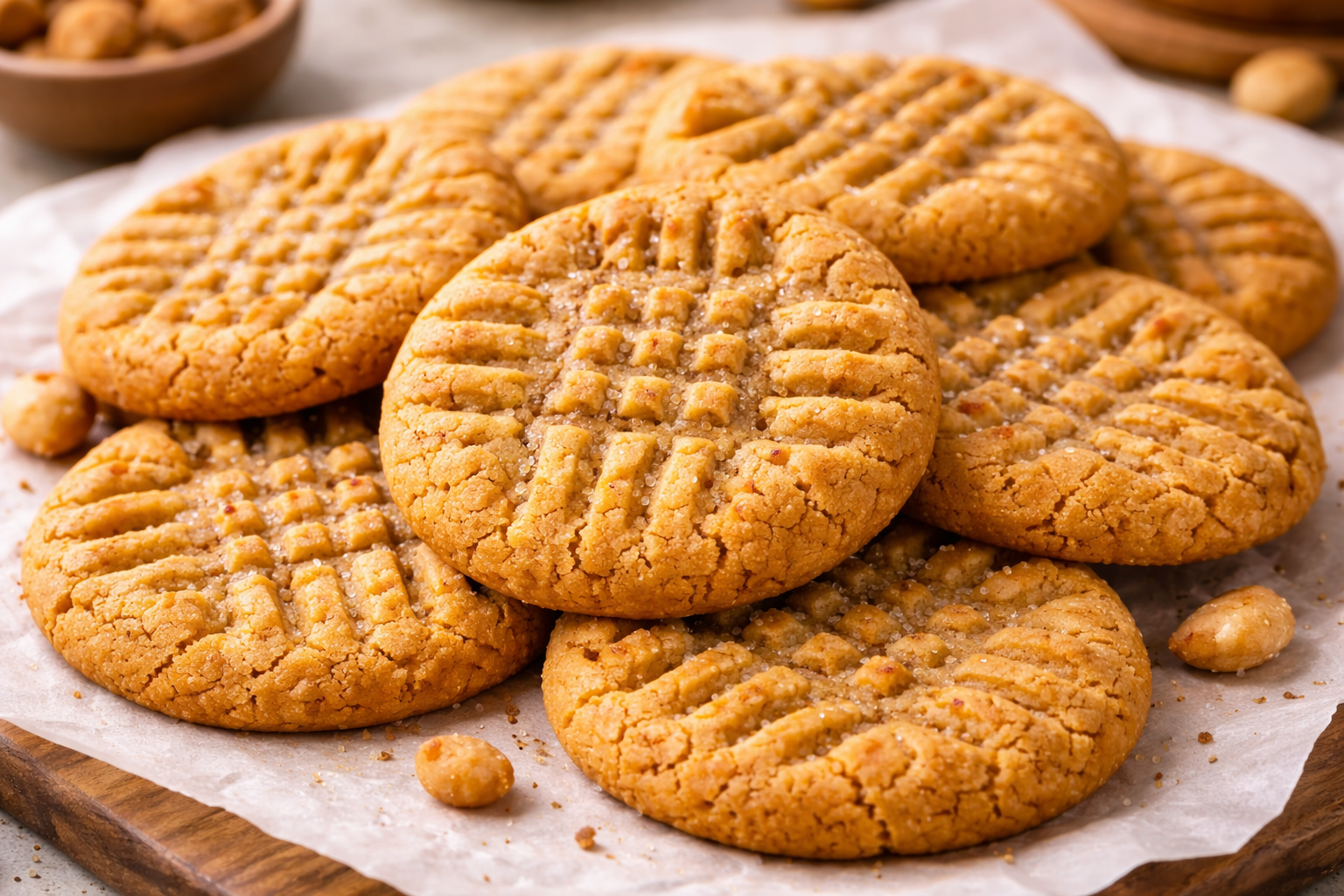
The iconic fork-pressed crisscross pattern has also made them visually recognizable. That pattern is not just decorative. It helps flatten dense dough so it bakes evenly.
What Makes the Best Peanut Butter Cookies
The best peanut butter cookies have three defining qualities:
- A rich peanut flavor that is noticeable but not overpowering.
- A soft center with slightly crisp edges.
- A tender texture that is not dry or crumbly.
Texture is everything in these cookies. Too much flour results in dry cookies. Too much sugar causes spreading and crispiness. Too little fat makes them dense.
Balance is the secret.
When baked correctly, peanut butter cookies should feel slightly underdone in the center when removed from the oven. They will firm up as they cool while staying soft inside.
Ingredients for Peanut Butter Cookies
- All-purpose flour
- Baking soda
- Salt
- Unsalted butter (softened)
- Creamy peanut butter
- Brown sugar
- Granulated sugar
- Egg (room temperature)
- Vanilla extract
Why Each Ingredient Matters
Peanut butter is the star ingredient. Creamy peanut butter works best for a smooth texture. Natural peanut butter can be used, but it must be stirred well because separated oil can affect consistency.
Butter adds richness and softness. Using unsalted butter gives better control over flavor.
Brown sugar adds moisture and chewiness due to molasses content. Granulated sugar helps create slight crispness on the edges.
Flour provides structure. Measuring it accurately is essential to prevent dryness.
Baking soda helps cookies rise slightly and spread properly.
Egg binds everything together and contributes to softness.
Vanilla enhances overall flavor and balances the peanut taste.
Cooking Method for Peanut Butter Cookies
Start by preheating your oven to 350°F (175°C). This ensures the oven is evenly heated before your cookies go in, which helps them bake uniformly. Line a baking tray with parchment paper or a silicone baking mat so the cookies don’t stick and clean-up becomes easier.
In a large mixing bowl, add the softened butter along with the peanut butter. Make sure the butter is at room temperature, not melted. Using a hand mixer or a whisk, beat them together until the mixture becomes smooth and creamy. This step is important because it creates the soft and tender texture in your cookies.
Now add both the brown sugar and granulated sugar to the bowl. Continue mixing for about 2 to 3 minutes until the mixture looks light and fluffy. Proper creaming helps incorporate air into the dough, which gives the cookies a better texture.
Next, crack in the egg and pour in the vanilla extract. Mix again until everything is well combined. Scrape down the sides of the bowl if needed so no ingredients are left unmixed.
In a separate bowl, combine the all-purpose flour, baking soda, and a small pinch of salt. Stir them together evenly. Gradually add this dry mixture into the wet mixture. Mix slowly until a soft dough forms. Do not overmix at this stage, as that can make the cookies dense instead of soft.
Once your dough is ready, take small portions and roll them into balls using your hands. Each ball should be about the size of a tablespoon. Place them on the prepared baking tray, leaving some space between each ball because the cookies will spread slightly while baking.
Now comes the classic step. Take a fork and gently press it onto the top of each dough ball to create a crisscross pattern. This not only gives peanut butter cookies their traditional look but also helps flatten them evenly for baking.
Place the tray in the preheated oven and bake for about 9 to 11 minutes. Keep an eye on them. The edges should look lightly golden while the centers may still appear slightly soft. That is perfectly fine because they will continue to firm up as they cool.
Once baked, remove the tray from the oven and allow the cookies to rest on the tray for about 5 minutes. This helps them set properly. After that, transfer them carefully to a wire rack to cool completely.
Your homemade peanut butter cookies are now ready to enjoy. They will have a crisp edge with a soft, slightly chewy center and a rich peanut butter flavor in every bite.
The Secret to Soft Peanut Butter Cookies
Softness depends on moisture retention. Brown sugar plays a critical role because it holds moisture better than white sugar. Slightly underbaking also ensures the centers remain chewy.
Overbaking is the biggest mistake. Peanut butter cookies can go from perfect to dry in just two extra minutes.
Another important factor is peanut butter type. Commercial creamy peanut butter often produces more consistent results because of its stable fat structure.
Chewy vs Crispy Peanut Butter Cookies
If you prefer chewy peanut butter cookies, use more brown sugar than white sugar and bake for a shorter time.
If you prefer crispy cookies, increase granulated sugar slightly and bake a bit longer.
Both versions are delicious. It simply depends on personal preference.
Common Mistakes to Avoid
Using cold butter prevents proper creaming and affects texture.
Overmixing dough makes cookies tough.
Using too much flour creates dryness.
Skipping the fork press leads to uneven baking because peanut butter dough is dense.
Baking too long removes moisture and makes cookies crumbly.
Can You Make 3-Ingredient Peanut Butter Cookies?
Yes, simplified versions exist using peanut butter, sugar, and egg. They are quick and flourless.
However, while convenient, they lack the balanced texture of a full peanut butter cookies recipe. Adding flour and butter improves structure and softness significantly.
Storage and Shelf Life
Peanut butter cookies stay fresh for about 4 to 5 days in an airtight container at room temperature.
For longer storage, freeze baked cookies for up to three months. Cookie dough also freezes beautifully and can be baked directly from frozen with slight baking time adjustment.
How to Customize Peanut Butter Cookies
Peanut butter cookies are incredibly adaptable.
You can add chocolate chips for a peanut butter chocolate twist. You can drizzle melted dark chocolate on top for a bakery-style look. You can mix in chopped roasted peanuts for extra crunch.
A sprinkle of flaky sea salt on top enhances sweetness and deepens flavor.
For festive occasions, rolling dough balls in sugar before baking adds sparkle and slight crunch.
Nutritional Insight
Peanut butter provides protein and healthy fats. While cookies are still a treat, they can be slightly more satisfying than plain sugar cookies due to protein content.
Portion control remains important, but enjoying one or two homemade cookies is perfectly reasonable in a balanced diet.
Why This Peanut Butter Cookies Recipe Works
This recipe balances fat, sugar, and flour carefully. It ensures cookies spread just enough without becoming flat.
The combination of butter and peanut butter provides flavor depth and softness. Brown sugar keeps cookies moist. Controlled baking time prevents dryness.
When you follow these ratios and techniques, you get consistent results every time.
Serving Ideas
Peanut butter cookies taste amazing with a cold glass of milk. They also pair beautifully with coffee or tea.
You can use them to make ice cream sandwiches or crumble them over vanilla ice cream for a crunchy topping.
They also make thoughtful homemade gifts when packed in decorative tins.
Conclusion
Peanut butter cookies are a true classic. They are simple, nostalgic, and deeply satisfying. With the right balance of ingredients and proper baking technique, you can achieve soft, chewy peanut butter cookies that rival any bakery.
This recipe focuses on texture, flavor, and consistency so you can bake confidently every time. Whether you enjoy them warm from the oven or saved for later, these cookies are guaranteed to become a favorite.
Try this recipe today and experience how easy it is to make the best peanut butter cookies at home. Once you master it, you will never rely on store-bought again.
FAQs
Why are my peanut butter cookies dry?
Dry cookies usually result from overbaking or adding too much flour. Measure flour correctly and remove cookies when centers are still slightly soft.
Can I use natural peanut butter?
Yes, but stir it thoroughly to combine oil before measuring. The texture may be slightly softer.
How do I make cookies more chewy?
Use more brown sugar than white sugar and avoid overbaking.
Why do peanut butter cookies need fork marks?
Peanut butter dough is dense. Flattening helps cookies bake evenly.
Can I freeze peanut butter cookie dough?
Yes, scoop into portions and freeze. Bake directly from frozen with a slightly longer baking time.
How long do peanut butter cookies last?
They stay fresh for about 4 to 5 days in an airtight container.
Can I make them gluten-free?
Yes, substitute a 1:1 gluten-free flour blend for all-purpose flour.
Why didn’t my cookies spread?
Too much flour or dough that is too cold can prevent spreading.