
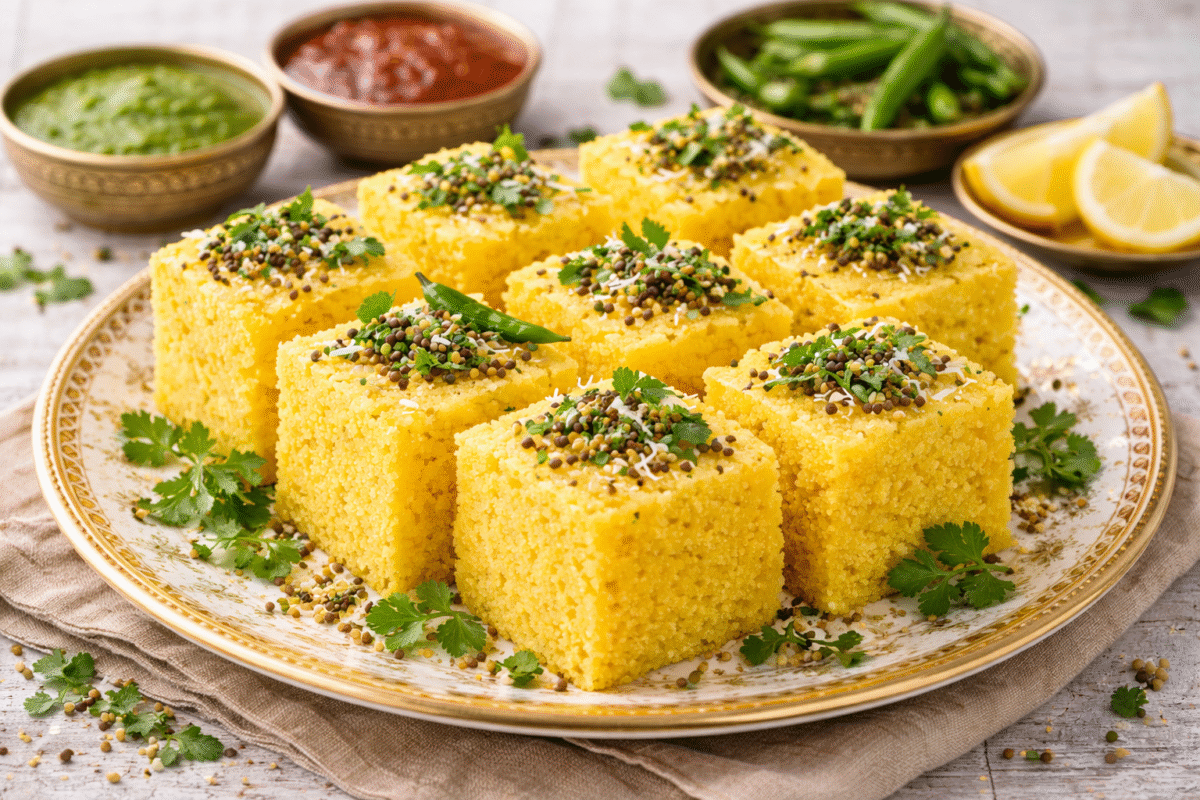
There is something deeply comforting about food that feels light yet satisfying. Khaman Dhokla belongs to that rare category of dishes that manage to be wholesome, flavorful, and celebratory at the same time.
Walk into any Gujarati home early in the morning or during festive preparations, and chances are you will find freshly steamed khaman resting under a cloth, slowly cooling while its aroma fills the kitchen. Soft to touch, bright yellow in color, and gently seasoned, khaman dhokla is not just a snack. It is an emotion tied to everyday meals, family gatherings, and hospitality.
This article takes you beyond a basic khaman dhokla recipe. You will understand why khaman behaves the way it does, how texture is created, what makes it spongy instead of dense, and how small adjustments can completely transform the final result.
What Makes Khaman Dhokla Unique
Khaman dhokla stands apart from most Indian snacks because of its cooking method. It is steamed, not fried. This single factor changes everything about how it feels on the palate and how the body responds to it.
The base ingredient, gram flour, gives khaman its protein-rich structure. Steaming allows the batter to rise gently, forming tiny air pockets that create a soft, porous crumb. The mild sweetness balances the savory elements, making khaman universally appealing across age groups.
Unlike heavy snacks, khaman does not leave you feeling sluggish. Instead, it feels light, fresh, and surprisingly filling.
Difference Between Khaman and Dhokla
Many people use the words khaman and dhokla interchangeably, but they are not the same.
Traditional dhokla is prepared using fermented rice and lentils, which gives it a sharper tang and denser texture. Khaman, on the other hand, is made using gram flour and is usually prepared instantly with leavening agents.
Khaman is softer, brighter in color, and milder in taste. This is why it has become more popular in modern kitchens where quick preparation is preferred.
Ingredients Used in Khaman Dhokla
For the Batter
- Gram flour (besan)
- Semolina (optional, for added softness)
- Fresh yogurt or lemon juice
- Sugar
- Salt
- Turmeric powder
- Ginger paste
- Green chili paste
- Water
Leavening
- Fruit salt (ENO) or baking soda
- Water for activation
For Tempering
- Oil
- Mustard seeds
- Curry leaves
- Green chilies
- Sesame seeds (optional)
For Garnish
- Fresh coriander leaves
- Grated coconut
Understanding the Science Behind Soft Khaman
Softness in khaman dhokla is not accidental. It comes from a delicate balance of hydration, aeration, and heat.
When the batter is mixed, gram flour absorbs moisture slowly. Allowing the batter to rest helps achieve even hydration. Leavening agents release gas when activated, creating air pockets. Steaming traps these pockets inside the batter, causing it to rise.
If any of these steps go wrong, khaman loses its signature texture.
Step-by-Step Process to Make Khaman Dhokla
Preparing the Batter
Gram flour is mixed with yogurt or lemon juice, sugar, salt, turmeric, ginger, and chili paste. Water is added gradually until a smooth, flowing batter forms. The batter should not be thick like dough or thin like soup.
At this stage, the batter is rested briefly to allow the flour to hydrate evenly.
Adding the Leavening Agent
Leavening agents are added only at the last moment. Once added, the batter is mixed gently and poured immediately into a greased tray.
This timing is critical. Delaying steaming after adding leavening results in flat khaman.
Steaming the Khaman
The batter is steamed in a preheated steamer over medium-high heat. Steam circulation should be consistent to ensure even rise. Khaman usually cooks within fifteen to twenty minutes.
A clean knife test confirms doneness.
Tempering: The Final Touch
The tempering poured over khaman plays a major role in flavor and moisture. Mustard seeds crackle in hot oil, releasing aroma. Curry leaves add freshness, while green chilies bring mild heat.
Some households also pour lightly sweetened water over khaman to keep it moist. This step is optional but traditional.
Texture Check: What Perfect Khaman Feels Like
Perfect khaman dhokla feels soft when pressed and springs back gently. It should not crumble or feel sticky. The crumb should be even, with small visible pores.
If khaman collapses after steaming, the batter may have been over-mixed. If it feels rubbery, steaming time may have been excessive.
Popular Styles of Khaman Dhokla
Nylon Khaman
Exceptionally soft and airy, often found in Gujarati farsan shops.
Masala Khaman
Spiced with extra chilies and ginger for a bolder taste.
Sandwich Khaman
Layered with green chutney for visual appeal and contrast.
Cheese Khaman
A modern twist with grated cheese on top.
Nutritional Value of Khaman Dhokla
Khaman dhokla is a good source of plant-based protein and fiber. Steaming preserves nutrients and keeps fat content low.
Compared to fried snacks, khaman is easier to digest and more suitable for daily consumption. However, sugar and oil should be used mindfully.
Is Khaman Dhokla Suitable for Weight Management
When portion-controlled, khaman dhokla can fit into a balanced diet. It provides satiety without excessive calories and works well as a light breakfast or snack.
Avoid excessive tempering oil and sugary soaking water for a lighter version.
Common Mistakes That Ruin Khaman
Dense khaman usually results from inactive leavening agents or delayed steaming. Bitter taste often comes from excess baking soda. Dry texture can be caused by over-steaming or skipping moisture-enhancing steps.
Paying attention to timing and proportions solves most problems.
Expert Tips for Consistent Results
Always preheat the steamer. Use fresh leavening agents. Mix gently after adding ENO. Steam immediately. Allow khaman to rest briefly before cutting.
These small habits make a big difference.
How to Serve Khaman Dhokla
Khaman dhokla is best served warm or at room temperature. It pairs well with green chutney, sweet chutney, or plain tea. Fried green chilies add contrast and authenticity.
Storage and Reheating
Khaman stays fresh for a day at room temperature and up to two days in the refrigerator. Reheat gently using steam or microwave with moisture to prevent drying.
Freezing is not recommended.
Why Homemade Khaman Dhokla Is Worth It
Homemade khaman offers better texture, controlled sweetness, and freshness. It also allows customization based on personal taste.
Store-bought versions often sacrifice softness for shelf life.
Conclusion
Khaman Dhokla is proof that simple ingredients, when handled with care, can create something extraordinary. Soft, airy, and delicately flavored, it is a dish that belongs in every home kitchen.
Once you understand the method and rhythm, making khaman becomes effortless. Steam it fresh, garnish generously, and enjoy a timeless Gujarati favorite.
Try it once, and it will become part of your regular cooking routine.
FAQs
1. Why does my khaman not rise properly?
This usually happens due to inactive leavening agents or delayed steaming.
2. Can I make khaman dhokla without yogurt?
Yes, lemon juice or citric acid works well as a substitute.
3. Is khaman dhokla gluten-free?
Yes, gram flour is naturally gluten-free.
4. How do I keep khaman moist?
Light sugar water and proper tempering help retain moisture.
5. Can khaman be made vegan?
Yes, skip yogurt and use lemon juice.
6. Why does my khaman taste bitter?
Excess baking soda or ENO causes bitterness.
7. Can I make khaman ahead of time?
Yes, but it tastes best when fresh.
8. What is the ideal color of khaman dhokla?
A bright, natural yellow indicates correct balance and steaming.