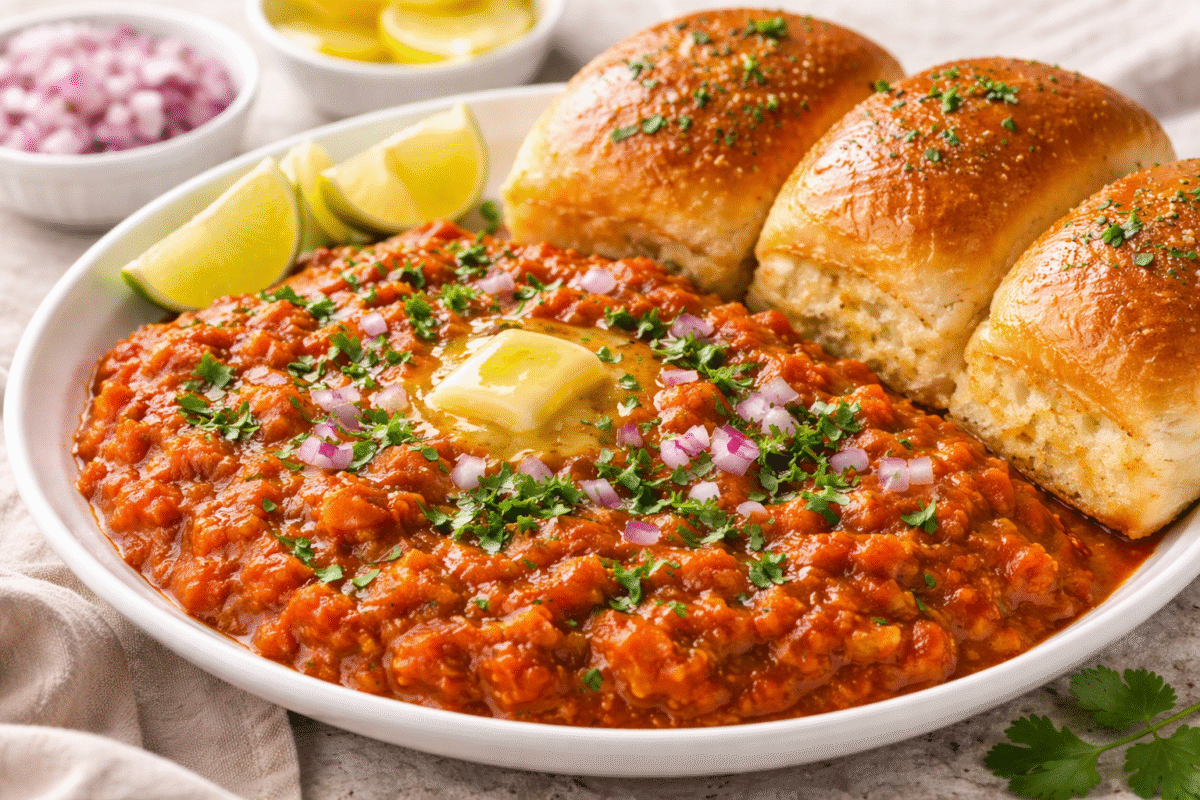
Pav Bhaji is one of the most iconic street foods in India, especially loved in Mumbai, where it originated. This dish is a perfect combination of bold flavors, comforting textures, and vibrant colors. It consists of a thick vegetable mash, cooked with butter and spices, served alongside soft bread rolls toasted to perfection.
What makes pav bhaji truly special is its simplicity and richness at the same time. It transforms everyday vegetables into a delicious and satisfying meal. The buttery aroma, the spicy masala, and the tangy hint of lemon make every bite irresistible.
Whether you have tasted it at a street stall or are trying it for the first time, making pav bhaji at home is an experience worth enjoying. With the right technique and a few simple tips, you can recreate that authentic street-style flavor in your own kitchen.
What Is Pav Bhaji?
Pav bhaji is a dish made from a blend of boiled and mashed vegetables cooked with spices and butter. The word “bhaji” refers to the vegetable curry, while “pav” refers to the bread rolls served alongside it.
The bhaji is typically made using potatoes, peas, tomatoes, capsicum, and onions. These vegetables are cooked until soft and then mashed into a thick, smooth consistency. A special spice mix known as pav bhaji masala gives the dish its signature flavor.
The pav is lightly toasted with butter on a hot pan until golden and crisp on the outside while remaining soft inside.
The Story Behind Mumbai’s Famous Pav Bhaji
Pav bhaji has an interesting history that dates back to the textile mills of Mumbai. Workers needed a quick, affordable, and filling meal during their short breaks. Vendors began preparing a quick vegetable mash using leftover vegetables and spices, serving it with bread for convenience.
Over time, this simple meal evolved into a beloved street food. Today, pav bhaji is served in restaurants, street stalls, and homes across India and even globally.
Ingredients
To make authentic pav bhaji, you need a combination of fresh vegetables, spices, and butter.
For Bhaji
- Potatoes
- Tomatoes
- Green peas
- Capsicum (bell pepper)
- Onions
- Ginger-garlic paste
- Butter
- Pav bhaji masala
- Red chili powder
- Turmeric powder
- Salt
- Lemon juice
- Fresh coriander leaves
For Pav
- Pav (bread rolls)
- Butter
These ingredients come together to create a rich, spicy, and flavorful dish.
Step-by-Step Cooking Method
Making pav bhaji at home is easier than you might think. The process involves boiling vegetables, preparing the masala base, and cooking everything together into a thick curry.
Start by boiling potatoes, peas, and other vegetables until they are soft. Once cooked, mash them thoroughly to create a smooth mixture. The texture should be slightly coarse but mostly creamy.
In a large pan, heat butter and add finely chopped onions. Cook them until they turn soft and translucent. Then add ginger-garlic paste and sauté until the raw aroma disappears.
Next, add chopped tomatoes and cook until they become soft and blend into the mixture. This forms the base of the bhaji. Add spices like turmeric, chili powder, and pav bhaji masala, and mix well.
Now add the mashed vegetables to the pan and combine everything thoroughly. Use a masher to continue mashing the mixture while it cooks. This step is important because it helps the flavors blend together.
Add water as needed to adjust the consistency. The bhaji should be thick but smooth, not too watery. Let it simmer on low heat for several minutes so the flavors develop fully.
Finish by adding a generous amount of butter, fresh coriander, and a squeeze of lemon juice.
To prepare the pav, heat butter on a pan and toast the bread rolls until golden brown.
Serve the hot bhaji with buttered pav, chopped onions, and lemon wedges.
What Makes Pav Bhaji Taste Like Street Style
Street-style pav bhaji has a unique flavor that is hard to replicate unless you know the secrets behind it.
One of the key factors is the generous use of butter. Street vendors often use a large amount of butter, which gives the dish its rich taste and aroma.
Another important element is constant mashing while cooking. This creates a smooth texture and ensures the spices blend evenly.
The use of pav bhaji masala is also crucial. This spice blend contains a mix of aromatic spices that define the dish’s flavor.
Cooking the bhaji on a wide, flat pan allows it to cook evenly and enhances the taste.
Tips to Make Perfect Pav Bhaji at Home
Making great pav bhaji is all about technique and balance.
Cooking the vegetables until they are very soft ensures a smooth texture. Undercooked vegetables can make the bhaji lumpy.
Using ripe tomatoes adds natural sweetness and tanginess to the dish. This balances the spices and enhances flavor.
Adding butter at different stages of cooking creates layers of richness. It is not just about quantity but also timing.
Letting the bhaji simmer for a few extra minutes improves its taste significantly. This allows the spices to fully develop.
Variations of Pav Bhaji
Pav bhaji can be customized in many ways depending on your taste preferences.
Cheese pav bhaji is a popular variation where grated cheese is added on top, making the dish creamy and indulgent.
Jain pav bhaji is made without onions and garlic, using raw bananas or other vegetables instead.
Khada pav bhaji is less mashed and has visible chunks of vegetables for a different texture.
You can also add paneer or extra butter to make the dish richer.
Best Ways to Serve
Pav bhaji is best served hot and fresh. The bhaji should be topped with a dollop of butter, chopped onions, and fresh coriander.
The pav should be toasted until crisp on the outside and soft inside. Serving it with lemon wedges adds a refreshing tang that balances the richness.
It pairs perfectly with a cold drink or buttermilk, making it a complete and satisfying meal.
Nutritional Value
Pav bhaji is packed with vegetables, making it a good source of vitamins and minerals. Potatoes provide carbohydrates, while peas add protein and fiber.
However, the dish can be high in butter, so it is best enjoyed in moderation. You can make a healthier version by reducing butter and using whole wheat pav.
Common Mistakes to Avoid
One common mistake is not mashing the vegetables properly, which affects texture. Another is adding too much water, which makes the bhaji thin.
Using too little spice can result in a bland dish, while overcooking can make it overly thick and dry.
Balancing flavors is key to achieving the perfect pav bhaji.
Conclusion
Pav bhaji is more than just a street food; it is a celebration of flavors and comfort. Its rich, buttery taste combined with spicy mashed vegetables makes it one of the most loved dishes in India.
Making pav bhaji at home allows you to control the ingredients and customize it to your taste. With the right technique, you can recreate the authentic street-style experience in your own kitchen.
Try this easy pav bhaji recipe today and enjoy a delicious, restaurant-style dish with your family. Once you make it at home, you’ll never want to go back to store-bought versions.
FAQs
1. What is pav bhaji made of?
Pav bhaji is made from mashed vegetables like potatoes, peas, tomatoes, and capsicum cooked with spices and butter.
2. Can I make pav bhaji without butter?
Yes, but butter adds richness and authentic flavor. You can reduce the quantity if needed.
3. What bread is used for pav bhaji?
Soft bread rolls called pav are traditionally used.
4. Is pav bhaji spicy?
It is moderately spicy, but you can adjust the spice level to your preference.
5. Can I make pav bhaji ahead of time?
Yes, it can be prepared in advance and reheated before serving.
6. How do I thicken pav bhaji?
Mash the vegetables more and cook longer to reduce excess moisture.
7. What is pav bhaji masala?
It is a special spice blend made from various Indian spices that give pav bhaji its signature taste.
8. Can I freeze pav bhaji?
Yes, the bhaji can be frozen and reheated later, but fresh is always best.
Also Try – Khaman Dhokla – Soft, Spongy Gujarati Classic