
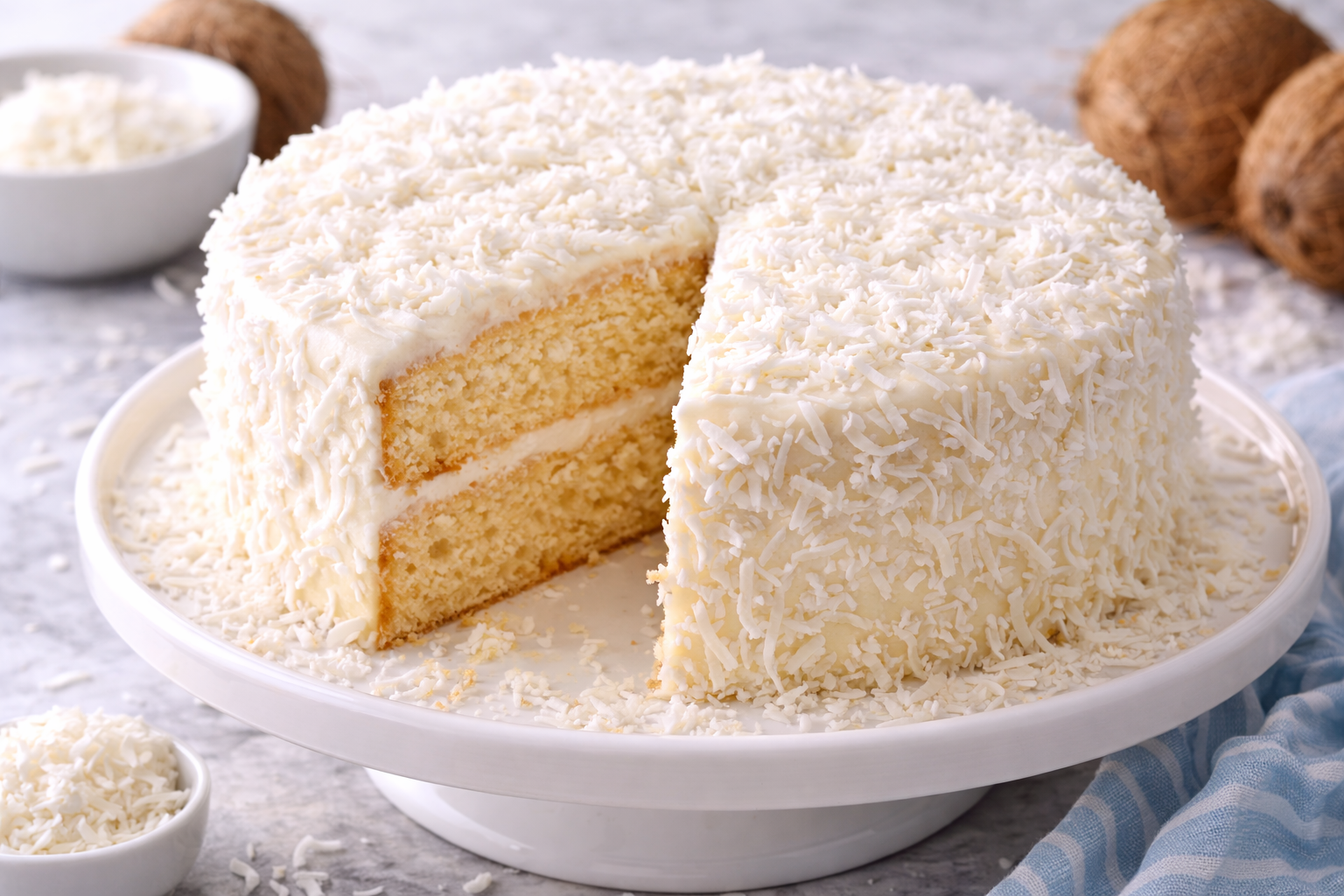
There’s something timeless and comforting about a well-made coconut cake. It feels nostalgic yet elegant, simple yet deeply flavorful. One bite should be soft, tender, lightly sweet, and fragrant with real coconut—not dry, not overly sugary, and definitely not bland. Unfortunately, many coconut cakes fall into those traps.
This guide exists to fix that.
Here, you’ll learn how to make a moist coconut cake that stays soft for days, tastes rich without being heavy, and looks stunning enough for special occasions. Whether you’re baking for a birthday, holiday, or just because coconut cravings hit hard, this recipe walks you through everything with clarity and confidence.
This isn’t just a recipe. It’s a deep dive into what makes coconut cake truly great—from ingredient choices to baking science, frosting options, storage tips, and smart variations.
What Makes a Coconut Cake Truly Exceptional
A great coconut cake isn’t defined by sweetness alone. Balance is everything. Texture, aroma, moisture, and structure all work together.
The best coconut cake has a crumb that’s soft but stable, moist without being greasy, and flavorful without tasting artificial. Achieving that requires understanding coconut as an ingredient rather than just tossing it in and hoping for the best.
Coconut behaves differently than vanilla or chocolate. It absorbs liquid, adds texture, and carries fat. When used correctly, it elevates a cake into something unforgettable.
Understanding Coconut Ingredients
Coconut cakes fail most often because the wrong type of coconut is used, or it’s used incorrectly.
Shredded Coconut
Unsweetened shredded coconut adds texture and natural coconut flavor without overpowering sweetness. Sweetened coconut can be used, but it changes the sugar balance and moisture level.
Finely shredded coconut blends into the batter and creates a tender crumb. Larger flakes add chew and visual appeal but should be used thoughtfully.
Coconut Milk
Full-fat coconut milk is a game changer. It adds richness, moisture, and authentic coconut flavor. Light coconut milk lacks the fat needed for a soft crumb and should be avoided for cakes.
Coconut Extract
Used sparingly, coconut extract enhances flavor without making the cake taste artificial. Too much can quickly overwhelm the palate.
Ingredients You’ll Need
Only where it truly matters, here’s a clear ingredient breakdown.
For the Coconut Cake
- All-purpose flour
- Baking powder and baking soda
- Salt
- Unsalted butter
- Granulated sugar
- Eggs
- Full-fat coconut milk
- Unsweetened shredded coconut
- Vanilla extract
- Coconut extract (optional)
For the Coconut Frosting
- Unsalted butter
- Cream cheese or heavy cream (depending on style)
- Powdered sugar
- Coconut extract
- Toasted coconut for garnish
Step-by-Step Coconut Cake Method
Preparing the Batter
Start by creaming butter and sugar until pale and fluffy. This step incorporates air, which helps the cake rise and stay light. Eggs are added one at a time to maintain emulsion and prevent curdling.
Dry ingredients are whisked separately to ensure even distribution of leavening agents. Coconut milk is added alternately with the flour mixture to keep the batter smooth and stable.
Fold in shredded coconut gently. Overmixing at this stage can make the cake dense.
Baking the Cake
Divide the batter evenly between prepared pans and bake until the centers spring back lightly when touched. Coconut cakes often look done before they actually are, so rely on touch and a toothpick test rather than color alone.
Allow cakes to cool completely before frosting. Warm layers will melt frosting and ruin structure.
Choosing the Right Frosting
Coconut cake pairs beautifully with several frosting styles, each offering a different experience.
Cream Cheese Coconut Frosting
This option adds tanginess that balances sweetness perfectly. It’s ideal if you enjoy contrast and richness without heaviness.
Coconut Buttercream
Light, fluffy, and classic. Buttercream highlights coconut flavor while keeping the cake elegant and traditional.
Whipped Coconut Frosting
Airy and less sweet, this frosting is perfect for those who prefer a lighter finish. It works especially well in warm climates.
Layering and Decorating Your Cake
A coconut layer cake should feel inviting, not intimidating. Keep decoration clean and intentional.
Toasted coconut adds texture and visual appeal. Fresh coconut shavings create a soft, snowy finish. Edible flowers or a simple piped border elevate presentation without overwhelming the cake.
Why This Coconut Cake Stays Moist
Moisture retention is the difference between a good cake and a great one.
This recipe relies on fat from coconut milk, proper sugar balance, and controlled baking time. Coconut naturally holds moisture, and when paired with butter and eggs correctly, the result is a cake that stays soft even after refrigeration.
Common Coconut Cake Mistakes
Many coconut cakes fail for predictable reasons.
Using low-fat coconut milk results in dryness. Overbaking steals moisture. Too much coconut extract creates an artificial aftertaste. Skipping salt flattens flavor.
Avoiding these pitfalls alone dramatically improves results.
Coconut Cake Variations Worth Trying
Coconut cake is versatile and adapts beautifully to different preferences.
A pineapple coconut version adds tropical brightness. Lemon coconut cake introduces freshness and acidity. Chocolate coconut cake creates contrast and indulgence.
You can also turn this recipe into cupcakes or a sheet cake with minor adjustments.
Storage and Make-Ahead Tips
Coconut cake stores exceptionally well when handled correctly.
Unfrosted layers can be wrapped tightly and frozen for up to two months. Frosted cake keeps well in the refrigerator for four days and tastes even better after resting overnight.
Always bring cake to room temperature before serving for best texture and flavor.
Nutritional Insight
Coconut cake is an indulgence, but coconut itself offers benefits like healthy fats and fiber. When enjoyed mindfully, it’s a satisfying dessert that feels worth every bite rather than empty sweetness.
Conclusion
A truly great coconut cake is more than just sweet—it’s balanced, moist, aromatic, and comforting. With the right ingredients, proper technique, and thoughtful frosting, you can create a bakery-style coconut cake at home that rivals anything from a professional kitchen.
If you’ve ever been disappointed by dry or bland coconut cake, this recipe will change that experience completely.
Bake it once, and it will become a go-to favorite for celebrations, gatherings, and quiet indulgent moments alike.
If you loved this recipe, save it, share it, and explore more classic cakes with a modern, foolproof twist.
FAQs
What makes coconut cake moist?
Moist coconut cake relies on full-fat coconut milk, proper fat balance, and careful baking time. Coconut naturally retains moisture, which helps the cake stay soft longer.
Can I use sweetened shredded coconut?
Yes, but reduce sugar slightly to avoid overpowering sweetness. Unsweetened coconut gives better control over flavor.
Can coconut cake be made ahead of time?
Absolutely. Bake layers in advance and frost the next day. The flavor improves as the cake rests.
Is coconut extract necessary?
No, but a small amount enhances coconut flavor. Too much can taste artificial.
Can this recipe be turned into cupcakes?
Yes. Adjust baking time to 18–22 minutes and monitor closely.
How do I keep coconut cake from drying out?
Store it airtight, avoid overbaking, and bring it to room temperature before serving.
Does coconut cake need refrigeration?
If frosted with cream cheese or whipped frosting, yes. Buttercream versions can sit at cool room temperature for short periods.