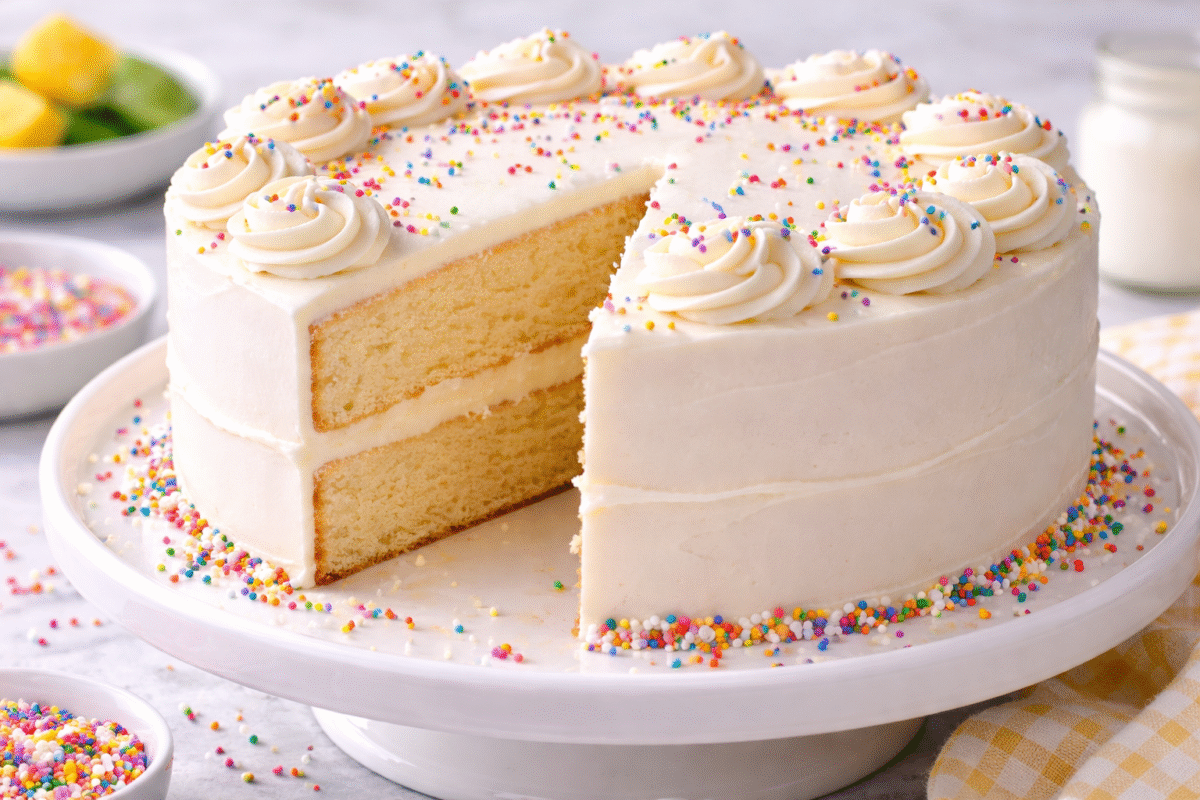
There’s something quietly powerful about a truly good vanilla cake. It doesn’t rely on bold flavors or dramatic toppings to impress. Instead, it wins hearts with its soft crumb, gentle sweetness, and rich aroma of real vanilla. When baked right, a vanilla cake becomes the foundation of countless celebrations—from birthday parties to weddings—and even simple moments like a weekend tea break.
Many people underestimate vanilla cake, assuming it’s plain or boring. In reality, it’s one of the most technically important cakes in baking. Because there’s nowhere to hide, every ingredient and every step matters. This guide walks you through everything you need to know to bake a moist, fluffy, bakery-style vanilla cake at home, even if you’re a beginner.
What Makes a Vanilla Cake Truly Great
A great vanilla cake isn’t dense, dry, or crumbly. It should feel light when you lift it, soft when you slice it, and moist enough to stay fresh for days. The flavor should be clean and balanced, with vanilla leading but not overpowering.
What separates an average vanilla cake from an exceptional one is texture control. Proper mixing, correct ingredient temperature, and balanced fat and liquid ratios play a huge role. Even small changes—like overmixing the batter or using cold ingredients—can affect the final result.
The Science Behind a Soft and Moist Vanilla Cake
Baking is chemistry, especially when working with a delicate cake like vanilla. Flour provides structure, eggs add richness and stability, sugar sweetens and locks in moisture, and fat tenderizes the crumb. Vanilla extract enhances aroma and flavor without adding heaviness.
Milk or buttermilk hydrates the batter and softens the crumb, while baking powder gives lift. When these elements work in harmony, the cake rises evenly and stays soft long after cooling.
Ingredients That Matter Most
While vanilla cake uses basic pantry staples, quality makes a noticeable difference. Using real vanilla extract instead of artificial flavoring gives depth. Fresh eggs help with structure and moisture, and good butter adds richness you can taste.
Where it truly matters is balance. Too much flour can make the cake dry, while too much sugar can cause it to sink. Accurate measuring is essential for consistent results.
Key Ingredients You’ll Need
- All-purpose flour for structure
- Unsalted butter for richness
- Granulated sugar for sweetness and moisture
- Eggs at room temperature
- Milk or buttermilk for tenderness
- Pure vanilla extract for flavor
- Baking powder for lift
- A pinch of salt to balance sweetness
Choosing the Right Vanilla
Vanilla is the star of this cake, so choosing the right type matters. Pure vanilla extract offers warmth and depth, while vanilla bean paste adds visual specks and a more intense aroma. Artificial vanilla can work in a pinch but lacks complexity.
If you want bakery-style flavor, invest in good vanilla. Even a small amount elevates the entire cake.
How to Make Vanilla Cake Step by Step
Making vanilla cake is straightforward, but attention to detail makes all the difference. Start by bringing your ingredients to room temperature. This allows everything to mix evenly and helps create a smoother batter.
Creaming butter and sugar properly is crucial. This step traps air, which helps the cake rise. Eggs should be added slowly to avoid curdling. Dry ingredients are mixed separately to ensure even distribution, then gently folded into the batter with milk to keep the texture light.
Overmixing is the most common mistake. Once flour is added, mix just until combined. The batter should be smooth but not stiff.
Baking Tips for Perfect Results
The oven temperature should be stable before baking begins. Baking in a preheated oven ensures even rise and prevents dense layers. Using the center rack allows hot air to circulate properly.
Avoid opening the oven door too early, as sudden temperature changes can cause the cake to collapse. Test for doneness by inserting a toothpick into the center—it should come out clean or with a few soft crumbs.
Cooling and Storage Matters More Than You Think
Cooling the cake properly prevents sogginess and structural issues. Let the cake cool in the pan briefly, then transfer it to a wire rack. Allow it to cool completely before frosting to avoid melting or sliding.
Stored properly, vanilla cake stays moist for several days at room temperature and even longer when refrigerated. Wrapping it well helps retain moisture and flavor.
Frosting Options That Pair Beautifully with Vanilla Cake
Vanilla cake is incredibly versatile and pairs well with many frostings. Classic buttercream highlights the vanilla flavor, while cream cheese frosting adds a slight tang. Chocolate frosting creates contrast, and whipped cream keeps things light.
For celebrations, layered vanilla cake with buttercream remains a timeless favorite. For everyday enjoyment, a simple dusting of powdered sugar works beautifully.
Common Mistakes and How to Avoid Them
Dry vanilla cake is usually caused by overbaking or too much flour. Dense texture often comes from overmixing. Uneven rise can happen if the oven temperature isn’t accurate or the batter isn’t evenly distributed.
Understanding these issues helps you fix them before they happen, ensuring consistent success every time you bake.
Why Homemade Vanilla Cake Beats Store-Bought
Homemade vanilla cake offers freshness, control, and real flavor. You can adjust sweetness, choose quality ingredients, and bake it exactly to your preference. Unlike store-bought versions, homemade cake doesn’t rely on preservatives or artificial flavors.
The aroma alone makes baking at home worthwhile. Few things are as comforting as the smell of vanilla cake filling your kitchen.
Vanilla Cake Variations to Try
Vanilla cake serves as a perfect base for creative twists. Adding citrus zest brightens the flavor, while folding in berries adds freshness. Turning it into a layered celebration cake or cupcakes makes it adaptable for any occasion.
Once you master the classic version, variations become easy and exciting.
Conclusion
A classic vanilla cake may look simple, but when done right, it’s one of the most satisfying desserts you can bake. Soft, moist, and full of comforting vanilla flavor, it’s a recipe you’ll return to again and again. Whether you’re baking for a celebration or just because, this vanilla cake delivers dependable, bakery-style results every time.
If you try this recipe, take your time, trust the process, and enjoy every step. Baking vanilla cake isn’t just about dessert—it’s about creating something timeless and joyful.
FAQs
What makes a vanilla cake moist?
The right balance of fat, liquid, and sugar helps lock in moisture. Proper mixing and avoiding overbaking are equally important.
Can I use oil instead of butter?
Oil creates a very moist cake but lacks the rich flavor butter provides. A combination can also work well.
Why did my vanilla cake sink in the middle?
This usually happens due to underbaking, opening the oven too early, or using too much leavening.
Can I make this cake ahead of time?
Yes, vanilla cake stores well. You can bake it a day in advance and frost it before serving.
What’s the best pan for vanilla cake?
Aluminum pans bake evenly and are ideal for vanilla cakes. Always grease and line them properly.
Can I turn this recipe into cupcakes?
Absolutely. Vanilla cake batter works perfectly for cupcakes with adjusted baking time.
Try this – Moist Coconut Cake Recipe (Bakery-Style & Foolproof)